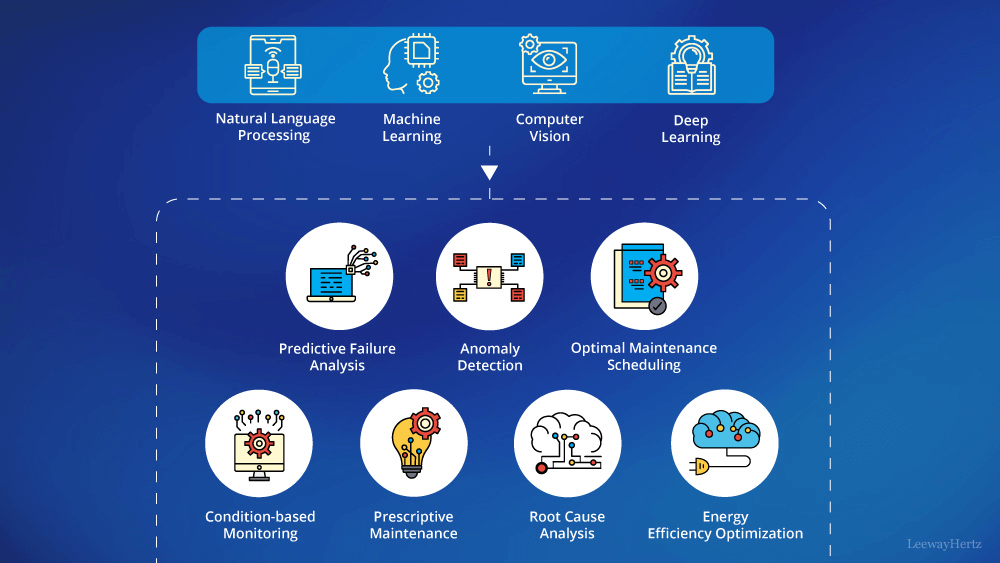
What Technologies are Allowing Predictive Maintenance to Spread: Game-Changing Innovations
Imagine catching a machine problem before it even happens. Sounds like a superpower, right?
That’s exactly what predictive maintenance promises. But what makes this magic possible? The answer lies in a few groundbreaking technologies that are changing the way you manage equipment and avoid costly downtime. If you want to know how these innovations can save your time, money, and stress, keep reading.
This article will uncover the key technologies driving the rise of predictive maintenance and how they can work for you.
Advancements In Sensor Technology
Advancements in sensor technology have been a game-changer for predictive maintenance. Sensors now capture data more accurately and in real-time, allowing you to spot issues before they cause downtime. This improvement in sensing capability means machines can be monitored continuously, making maintenance smarter and less costly.
Types Of Sensors Used
Sensors come in many forms, each suited for a specific task in predictive maintenance. You’ll find:
- Vibration Sensors:Detect unusual vibrations that hint at mechanical problems.
- Temperature Sensors:Monitor heat levels to catch overheating early.
- Pressure Sensors:Measure fluid or gas pressure to spot leaks or blockages.
- Acoustic Sensors:Listen for abnormal sounds indicating wear or damage.
- Ultrasonic Sensors:Track material thickness and detect cracks before they worsen.
These sensors cover a broad spectrum of machine health indicators, giving you a comprehensive view of equipment conditions.
Role In Data Collection
Sensors act as the frontline data collectors in predictive maintenance. They continuously gather critical information from machines without interrupting operations. This real-time stream of data lets you analyze trends and predict failures with much greater confidence.
Think about your own experience with a car’s dashboard warning lights—they alert you to issues early enough to avoid breakdowns. Sensors work similarly but on a more detailed and sophisticated level.
How often do you check your equipment’s health? With advanced sensors, you can automate this process, reducing human error and improving response times. This makes maintenance proactive, not reactive.
Internet Of Things (iot) Integration
The Internet of Things (IoT) integration plays a key role in expanding predictive maintenance. It connects machines, sensors, and systems for real-time data exchange. This connection helps detect issues before they become serious. IoT allows continuous monitoring of equipment health. It also supports smarter decision-making and efficient maintenance scheduling.
Iot Devices And Connectivity
IoT devices include sensors, smart meters, and embedded systems. They collect data on temperature, vibration, pressure, and more. These devices use wireless networks like Wi-Fi, Bluetooth, or 5G. Connectivity ensures fast and reliable data transfer. It allows devices to communicate with cloud platforms and control centers.
- Sensors track equipment condition constantly
- Wireless networks enable instant data sharing
- Cloud storage allows centralized data access
Impact On Predictive Maintenance
IoT improves the accuracy of predicting equipment failures. Data from devices helps identify patterns and anomalies early. This reduces downtime and costly repairs. Maintenance teams get alerts on potential problems. They can plan repairs before breakdowns happen. IoT also supports remote monitoring, saving time and resources.
- Early detection of faults reduces emergency repairs
- Data-driven insights improve maintenance schedules
- Remote access enhances monitoring and control
Artificial Intelligence And Machine Learning
Artificial Intelligence (AI) and Machine Learning (ML) play a key role in spreading predictive maintenance. These technologies analyze data to predict equipment failures before they happen. They help companies avoid costly breakdowns and reduce downtime. AI and ML learn from data patterns and improve over time, making maintenance smarter and more efficient.
Ai Algorithms In Maintenance
AI algorithms process large amounts of sensor and operational data. They detect anomalies and identify early signs of wear or damage. These algorithms include:
- Classification models to sort equipment status
- Regression models to predict remaining useful life
- Anomaly detection to find unusual behavior
AI can handle complex data from multiple sources. It helps maintenance teams prioritize repairs based on risk and urgency. These algorithms work continuously to improve accuracy and reduce false alarms.
Benefits Of Machine Learning Models
Machine learning models learn from historical and real-time data. They adapt to new conditions without human intervention. Benefits include:
- Improved failure prediction accuracy
- Reduced maintenance costs by preventing unnecessary checks
- Better scheduling of maintenance tasks
- Minimized downtime through timely interventions
ML models help companies make data-driven decisions. They support proactive maintenance strategies that save time and money.

Credit: spartakustech.com
Data Analytics And Big Data
Data analytics and big data play a crucial role in spreading predictive maintenance. They help companies collect, analyze, and act on large amounts of data from machines and equipment. This makes it possible to spot issues early and plan repairs before breakdowns occur.
Using data analytics, businesses can turn raw data into useful insights. Big data allows the processing of vast and varied information in real time. Together, they improve the accuracy and efficiency of maintenance strategies.
Real-time Data Processing
Real-time data processing captures information from sensors and devices instantly. This lets systems monitor equipment conditions continuously. Immediate analysis helps detect faults or unusual patterns quickly.
Fast data flow supports timely decisions and alerts. It reduces downtime by addressing problems before they worsen. Real-time processing also improves resource use by scheduling maintenance only when needed.
Predictive Analytics Techniques
Predictive analytics uses statistical models and machine learning to forecast failures. It examines historical and current data to find trends and anomalies. This helps predict when a machine might stop working.
Techniques include:
- Regression analysis to identify relationships between variables
- Classification models to categorize equipment status
- Time series analysis to track changes over time
- Clustering to group similar fault patterns
These methods improve maintenance timing and reduce unexpected breakdowns. Predictive analytics transforms data into proactive maintenance actions.
Cloud Computing Solutions
Cloud computing solutions have become a backbone for spreading predictive maintenance across industries. They offer the infrastructure and tools needed to handle vast amounts of data generated by sensors and machines. This allows businesses to monitor equipment health in real-time and predict failures before they happen.
Storage And Accessibility
Predictive maintenance relies heavily on collecting and analyzing large datasets from numerous devices. Cloud storage provides a centralized place where all this data can be kept securely and accessed from anywhere.
You don’t need to worry about running out of space or investing in expensive hardware. Plus, teams across different locations can access the same information instantly, improving collaboration and decision-making.
Scalability And Efficiency
One major advantage of cloud solutions is their ability to scale according to your needs. Whether you’re monitoring a handful of machines or thousands, the cloud adjusts without costly upgrades.
This flexibility helps you save money and focus on improving your maintenance strategies instead of managing IT infrastructure. Also, cloud platforms often include powerful tools that speed up data processing and analysis, making your predictive maintenance efforts more efficient.
Credit: us.mitsubishielectric.com
Edge Computing And Its Benefits
Edge computing plays a key role in spreading predictive maintenance. It brings data processing closer to the machines and sensors. This reduces the need to send large amounts of data to distant cloud servers. The result is faster and more efficient decision-making on the factory floor or in remote locations.
With edge computing, systems can analyze data in real time. This helps detect issues early and plan maintenance before equipment fails. The technology also lowers costs by minimizing data transfer and cloud storage needs. These benefits make predictive maintenance more practical and widely used across industries.
Faster Data Processing
Edge computing processes data right where it is created. This speeds up analysis and response times. Machines can detect anomalies and alert teams quickly. Fast data processing prevents downtime and reduces repair costs. It also supports continuous monitoring without delays.
Reduced Latency
Latency means the delay between data creation and action. Edge computing cuts this delay by handling data locally. Reduced latency allows instant reactions to equipment problems. This is vital for critical systems that cannot wait for cloud responses. Faster responses improve safety and keep operations smooth.
Augmented Reality (ar) Applications
Augmented Reality (AR) applications are transforming how predictive maintenance is performed across industries. By overlaying digital information onto physical equipment, AR helps technicians see real-time data, instructions, and alerts without diverting their attention. This hands-free access to vital information boosts efficiency and accuracy during maintenance tasks.
Enhanced Maintenance Procedures
AR lets you visualize complex machinery and its components directly on-site. Instead of flipping through manuals, you get step-by-step guides right in your field of vision. This reduces errors and shortens repair times.
Imagine repairing a complicated piece of equipment with an AR headset that highlights exactly which part needs attention and shows you how to fix it. This precision cuts down guesswork and unnecessary downtime.
Remote Assistance And Training
AR enables experts to assist technicians remotely by sharing live views and guiding them through repairs. This means you can get help instantly without waiting for an expert to arrive physically.
Training becomes more interactive and practical with AR simulations. Instead of reading about procedures, you can practice them in a virtual environment, gaining confidence before handling real equipment.
How could having immediate, visual support change the way you handle maintenance challenges in your workplace?

Credit: www.ripik.ai
Blockchain For Secure Data Management
Blockchain technology plays a key role in securing data for predictive maintenance. It offers a unique way to store and manage data that cannot be easily changed or hacked. This feature makes blockchain ideal for industries relying on accurate and safe data to predict equipment failures. By using blockchain, companies can keep maintenance records and sensor data protected from tampering.
Blockchain creates a permanent digital ledger. Every transaction or data entry is recorded in blocks linked together. This structure makes it hard for anyone to alter past information without detection. As a result, blockchain ensures the data used in predictive maintenance stays trustworthy and accurate over time.
Ensuring Data Integrity
Data integrity means the data is complete and unaltered. Blockchain guarantees this by storing data in a chain of blocks. Each block has a unique code, called a hash, connected to the previous block. Changing one block changes all following blocks, making tampering obvious.
This system prevents unauthorized changes to maintenance logs or sensor readings. Predictive maintenance depends on reliable data to forecast problems. Blockchain ensures the data stays consistent, helping avoid costly errors or false alarms.
Facilitating Trust And Transparency
Trust is vital in predictive maintenance, especially with multiple parties involved. Blockchain allows all participants to access the same data in real time. This transparency builds confidence in the accuracy of maintenance records.
Companies can track every action taken on equipment, from inspections to repairs. Stakeholders can verify data independently without relying on a single source. This openness reduces disputes and improves cooperation among teams.
Drones And Robotics In Maintenance
Drones and robotics are transforming how maintenance tasks are performed, pushing predictive maintenance beyond traditional limits. These technologies give you access to areas that were once hard to reach and allow for continuous monitoring without interrupting operations. By integrating drones and robots into your maintenance routine, you can catch problems earlier and reduce downtime significantly.
Automated Inspections
Drones equipped with high-resolution cameras and sensors can inspect large and complex structures quickly. They capture detailed images and data from hard-to-access places like rooftops, wind turbines, or pipelines. This means you don’t have to rely solely on manual inspections, which can be time-consuming and prone to human error.
Robots, on the other hand, can perform inspections inside confined or hazardous spaces where it’s unsafe for humans. They can detect cracks, corrosion, or leaks using ultrasonic or infrared sensors. This continuous and automated data collection feeds directly into your predictive maintenance system, giving you real-time insights.
Improving Safety And Efficiency
Using drones and robots keeps your maintenance team out of dangerous environments. You avoid putting workers on high scaffolds or into toxic areas, reducing injury risks. This shift not only improves safety but also saves time since drones and robots can operate faster and more frequently than humans.
Efficiency also improves because these technologies enable more precise scheduling of repairs. Instead of routine checks, you focus efforts exactly where the data shows a potential failure. This targeted approach saves costs and helps extend the life of your equipment.
Have you considered how many hours your team spends on inspections that drones or robots could handle? Adopting these tools could free up your staff for more skilled tasks, enhancing overall productivity.
Frequently Asked Questions
What Technologies Enable Predictive Maintenance Today?
Key technologies include IoT sensors, machine learning, and cloud computing. IoT collects data, AI analyzes it, and cloud stores it efficiently. These combined tools help predict equipment failures and schedule timely maintenance.
How Does Iot Support Predictive Maintenance?
IoT devices continuously monitor equipment health by collecting real-time data. This data helps detect anomalies early. IoT enables remote monitoring, reducing downtime and maintenance costs effectively.
Why Is Machine Learning Vital For Predictive Maintenance?
Machine learning processes vast data to identify patterns and predict failures. It improves accuracy over time by learning from past equipment behavior. This leads to smarter, proactive maintenance decisions.
What Role Does Cloud Computing Play In Predictive Maintenance?
Cloud computing stores and processes large volumes of maintenance data. It offers scalable resources for real-time analytics. Cloud platforms enable easy access to insights from anywhere, enhancing decision-making.
Conclusion
Predictive maintenance grows thanks to smart sensors and data tools. Machines send real-time information to detect problems early. Cloud computing helps store and analyze large data sets. Artificial intelligence finds patterns that humans might miss. These technologies lower costs and reduce unexpected breakdowns.
Companies gain better control over their equipment’s health. As technology improves, more industries adopt predictive maintenance. The future looks bright for safer, efficient operations. Simple tools lead to big changes in machine care.