What are Nonlinear Electronic Components: Key Insights Uncovered
Have you ever wondered why your electronic devices work the way they do? It’s not just magic; it’s a combination of various components working in harmony.
Among these, nonlinear electronic components play a crucial role. But what exactly are they? And why should you care? Understanding these components can not only deepen your appreciation for the technology you use daily but also empower you to make more informed decisions when it comes to purchasing or troubleshooting electronics.
You’ll discover what makes nonlinear components unique, how they differ from their linear counterparts, and why they are vital in modern electronics. Whether you’re a tech enthusiast or just curious, this insight could change the way you look at your gadgets forever. Ready to dive in?

Credit: www.origin-ic.com
Basics Of Nonlinear Components
Nonlinear electronic components play a crucial role in modern circuits. They do not follow a straight line relationship between voltage and current. Understanding their basics helps in grasping how many electronic devices work. These components respond differently under various conditions, unlike simple resistors or capacitors.
Linear Vs Nonlinear Behavior
Linear components have a direct, proportional relationship between voltage and current. For example, if voltage doubles, current doubles too. Their graphs form straight lines. Nonlinear components do not follow this rule. Their voltage-current graph curves or changes shape. This means the output does not change evenly with input. This behavior allows them to perform complex tasks like switching or amplification.
Common Nonlinear Characteristics
- Threshold Voltage:The voltage level where the component starts to conduct.
- Saturation:A point where current no longer increases much with voltage.
- Hysteresis:Different paths for increasing and decreasing signals.
- Negative Resistance:Regions where increasing voltage causes current to drop.
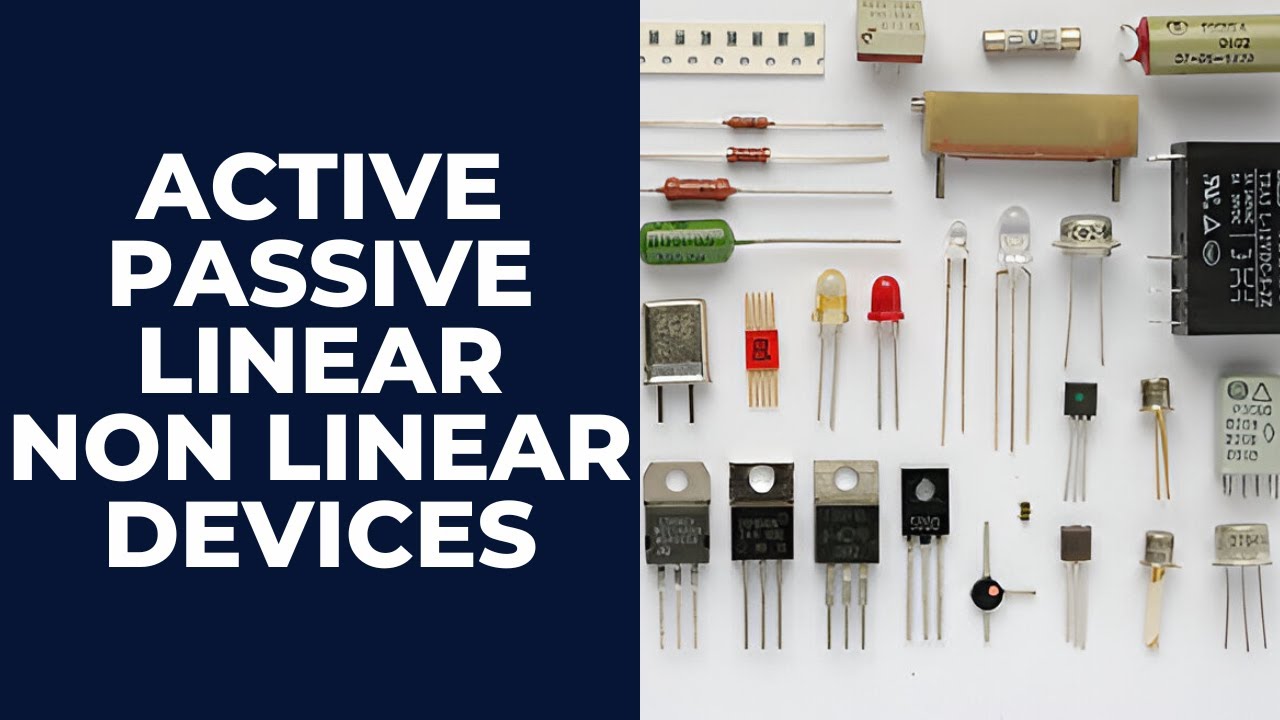
These characteristics make nonlinear components essential in circuits that need control or signal modification. Examples include diodes, transistors, and varistors. Each reacts uniquely, enabling a wide range of electronic functions.

Credit: www.mdpi.com
Types Of Nonlinear Components
Nonlinear electronic components do not follow a straight-line relationship between voltage and current. These components change their behavior based on the input signal. This change allows circuits to perform complex functions such as switching, amplification, and protection. Different types of nonlinear components serve different roles in electronic devices.
Diodes And Their Functions
Diodes allow current to flow in one direction only. They block current in the opposite direction. This property makes them useful as rectifiers in power supplies. Diodes also protect circuits by preventing reverse voltage. Light Emitting Diodes (LEDs) are diodes that emit light when current passes through them.
Transistors In Nonlinear Circuits
Transistors act as switches or amplifiers in circuits. They control large currents with small input signals. This control is nonlinear because the output does not increase evenly with input. Transistors form the base of most digital and analog electronic devices. They are key components in processors and radios.
Varistors And Their Applications
Varistors protect electronic circuits from voltage spikes. Their resistance changes sharply at certain voltage levels. This sudden change absorbs excess voltage, preventing damage. Varistors are common in surge protectors and power strips. They help safeguard sensitive devices during electrical surges.
Nonlinear Capacitors And Inductors
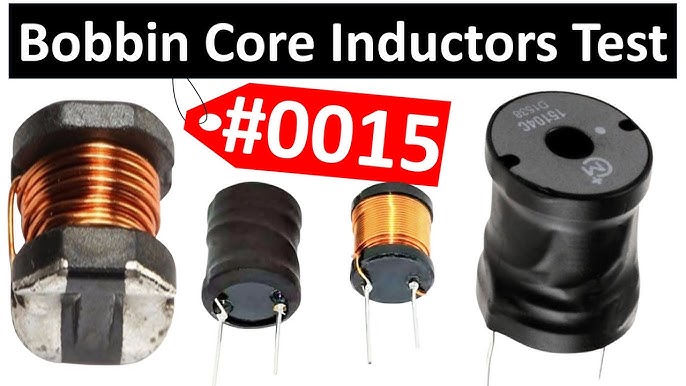
Some capacitors and inductors show nonlinear behavior under certain conditions. Their capacitance or inductance changes with voltage or current. These changes affect how signals pass through circuits. Nonlinear capacitors are used in tuning circuits. Nonlinear inductors help in filtering and signal shaping.
Applications In Electronics
Nonlinear electronic components play a crucial role in many electronic devices you use daily. Their ability to respond differently depending on the input makes them ideal for various practical applications. Let’s look at some key areas where these components make a real difference in electronics.
Signal Processing And Modulation
Nonlinear components such as diodes and transistors are vital in shaping and controlling signals. They help in modulating signals, which means altering the signal’s properties like amplitude or frequency to carry information efficiently.
Think about radios or cell phones. Without nonlinear components, transmitting clear, strong signals over long distances wouldn’t be possible. You rely on these components to ensure your voice or data travels without distortion.
Power Regulation And Switching
Power supplies in your gadgets depend heavily on nonlinear components to control voltage and current. Components like thyristors and MOSFETs switch electrical power on and off rapidly, ensuring devices get the right amount of power.
This switching action improves energy efficiency and protects your devices from damage. Ever wonder how laptops charge safely or how LED lights stay bright yet consume less power? Nonlinear components are behind these smart power management techniques.
Noise Reduction Techniques
Electronic noise can ruin signal quality, causing annoying interference in audio and communication systems. Nonlinear devices help reduce this noise by filtering unwanted frequencies and stabilizing signals.
Devices like varistors absorb voltage spikes, protecting circuits from sudden surges. When you use your home Wi-Fi or watch a movie on your phone, these components quietly work to keep the experience smooth and interruption-free.

Credit: www.researchgate.net
Modeling Nonlinear Components
Modeling nonlinear electronic components is essential for designing circuits that behave accurately under real conditions. Nonlinear components do not follow simple linear rules, making their behavior complex to predict. Creating accurate models helps engineers understand how these components respond to different signals and voltages.
These models rely on mathematical descriptions and computer simulations. Both approaches aim to capture the unique characteristics of nonlinear components. Models improve circuit performance and help avoid failures in real applications.
Mathematical Approaches
Mathematical models describe nonlinear behavior using equations. These equations relate voltage and current in ways that change with conditions. Common methods include:
- Polynomial equations to fit curves of device behavior
- Differential equations to model time-dependent changes
- Piecewise linear models for different operating regions
These models simplify complex behavior into manageable formulas. They help predict how components respond to inputs. Engineers adjust parameters in equations to match real device data. This approach provides insight into component performance under various conditions.
Simulation Tools And Methods
Simulation software offers practical ways to test nonlinear components. Tools use numerical algorithms to solve equations quickly. Common simulation platforms include:
- SPICE-based simulators for circuit-level analysis
- Finite element method (FEM) software for detailed device modeling
- Behavioral modeling tools to represent complex functions
Simulations allow engineers to explore different scenarios without physical prototypes. They reduce design time and cost. Visual outputs like graphs and waveforms show component behavior clearly. This helps identify issues early and optimize designs effectively.
Challenges And Considerations
Nonlinear electronic components bring unique challenges to circuit design and operation. Their behavior does not follow a straight line, making control and prediction harder. Engineers must consider many factors to ensure these components work well and last long.
Design Complexity
Nonlinear components need careful design to function correctly. Their response changes with voltage or current levels, requiring complex calculations. Simple linear models cannot predict their behavior accurately.
Designers must use advanced simulation tools to model these components. Trial and error often help to refine the circuit. Small changes in component values can cause large effects in output.
- Nonlinear behavior requires more testing and validation
- Special attention to feedback loops is necessary
- Component matching becomes critical for stable operation
Thermal And Reliability Issues
Nonlinear components often generate more heat than linear ones. Heat affects their performance and shortens their lifespan. Managing temperature is crucial to avoid failures.
Engineers must design cooling solutions or use heat-resistant materials. Stress from temperature changes can cause cracks or breakdowns inside components.
- Heat dissipation needs careful planning
- Thermal cycling may cause reliability problems
- Regular maintenance and checks improve lifespan
Frequently Asked Questions
What Are Nonlinear Electronic Components?
Nonlinear electronic components have voltage-current relationships that are not proportional. Their behavior changes with applied voltage or current, unlike linear components.
How Do Nonlinear Components Differ From Linear Ones?
Nonlinear components exhibit varying resistance or reactance based on signal levels. Linear components maintain constant properties regardless of voltage or current changes.
What Are Common Examples Of Nonlinear Electronic Components?
Examples include diodes, transistors, varistors, and tunnel diodes. These components are widely used in signal processing and switching applications.
Why Are Nonlinear Components Important In Electronics?
They enable signal modulation, amplification, and switching. Nonlinear components are essential for creating complex circuits like oscillators and amplifiers.
Conclusion
Nonlinear electronic components change current and voltage in unique ways. They help create circuits that do more than simple tasks. Diodes, transistors, and similar parts are key examples. These components make devices like radios and computers work properly. Understanding them helps you see how electronics function daily.
They play a big role in modern technology. Keep exploring to learn how these parts impact electronics around you.