
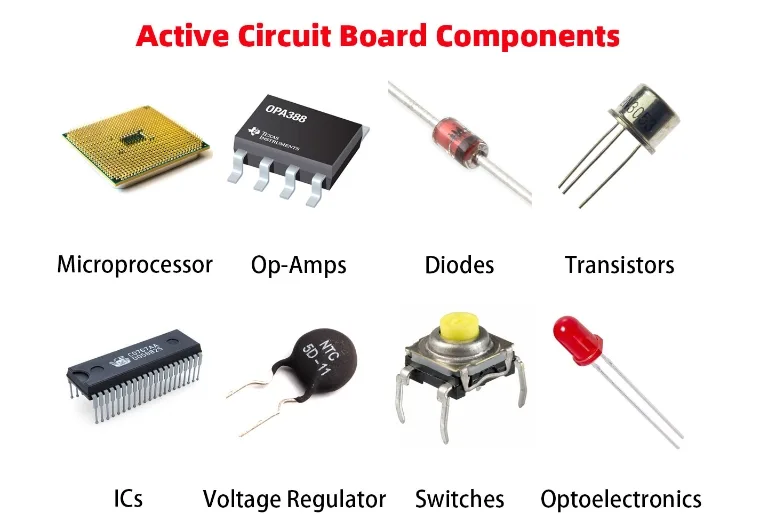
Have you ever wondered what makes your gadgets work? Whether it’s your smartphone, TV, or even a simple remote control, electronic components are the building blocks behind all these devices.
But what exactly are these components, and why should you care? Understanding the 5 key electronic components can help you grasp how technology powers your daily life. Keep reading, and you’ll discover the essential parts that bring electricity to life—and why knowing them could make a big difference for your next DIY project or tech conversation.
Resistors
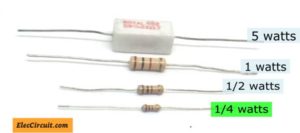
Resistors are one of the most fundamental electronic components you’ll encounter in any circuit. They control the flow of electric current, ensuring that other parts receive the right amount of power. Without resistors, your devices could easily overheat or malfunction, making these components essential for safety and functionality.
Function And Importance
Resistors limit the electric current that flows through a circuit. By offering resistance, they protect sensitive components from receiving too much current. This control helps maintain the stability and performance of electronic devices.
Think about your phone’s battery charging circuit. Without resistors managing the current, the battery could be damaged or even pose a safety risk. Resistors also allow you to adjust signal levels and divide voltages, giving you precise control over how your circuit behaves.
Types Of Resistors
Resistors come in several types, each suited for different tasks:
- Fixed Resistors:These resistors have a constant resistance value. They’re widely used in most everyday electronics.
- Variable Resistors (Potentiometers):You can adjust their resistance manually, making them perfect for volume controls and tuning circuits.
- Thermistors:These resistors change resistance based on temperature, useful for temperature sensing and protection.
- Photoresistors:Their resistance varies with light exposure, ideal for light-sensitive applications like automatic lighting.
Common Applications
Resistors appear in countless devices and setups. They help set the brightness of LEDs, control motor speeds, and shape audio signals. Whenever you need to manage current or voltage, resistors play a key role.
In DIY projects, I’ve found that picking the right resistor can make or break a circuit. Too high resistance, and your LED might barely glow; too low, and it could burn out. Have you ever adjusted a resistor value to fix a tricky circuit issue? It’s a simple change that often leads to big improvements.
Capacitors
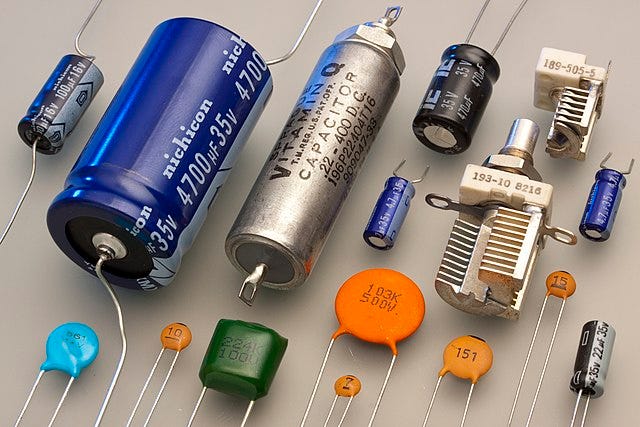
Capacitors are essential electronic components that store and release electrical energy. They hold an electric charge temporarily and help control voltage and current in circuits. Capacitors improve circuit performance and protect sensitive parts from damage.
Role In Circuits
Capacitors store electrical energy as an electric field. They smooth out voltage fluctuations and filter noise. Capacitors block direct current while allowing alternating current to pass. They also help tune circuits to specific frequencies and provide timing functions.
Varieties Of Capacitors
- Ceramic capacitors:Small, non-polarized, used for high-frequency applications.
- Electrolytic capacitors:Larger, polarized, provide high capacitance values.
- Tantalum capacitors:Stable, polarized, used in compact devices.
- Film capacitors:Reliable, non-polarized, used in audio and power circuits.
- Supercapacitors:Store large amounts of energy for short times.
Usage In Electronics
Capacitors are common in power supplies to smooth output voltage. They filter signals in radios and audio equipment. Timing circuits use capacitors to control intervals and delays. Capacitors protect circuits from voltage spikes and surges. They also aid in energy storage for cameras and flash devices.
Inductors
Inductors are fundamental electronic components that store energy in a magnetic field when electrical current flows through them. You’ll find them in a wide range of devices, from simple radios to complex power supplies. Their unique ability to resist changes in current makes them essential for managing signals and power in circuits.
Purpose In Electronic Devices
Inductors mainly store energy temporarily as magnetic fields. This helps in smoothing out electrical signals and filtering noise in circuits. They also block high-frequency alternating currents while allowing lower frequencies or direct current to pass.
Have you ever noticed how your phone charger works steadily without sudden spikes? That’s partly thanks to inductors stabilizing the current. They play a key role in power regulation, signal tuning, and energy transfer.
Different Inductor Types
- Air Core Inductors:These have no magnetic core and are used where low inductance and high frequency are required.
- Iron Core Inductors:Built with iron cores to increase inductance, suitable for power applications.
- Ferrite Core Inductors:Use ferrite material to reduce losses at high frequencies, common in radio-frequency circuits.
- Toroidal Inductors:Shaped like a doughnut, these minimize electromagnetic interference.
Choosing the right type depends on your project’s frequency, size, and efficiency needs.
Examples In Real-world Applications
- Power Supplies:Inductors smooth out the current to protect sensitive electronic parts.
- Radio Transmitters:They help tune circuits to specific frequencies for clear communication.
- Electric Vehicles:Inductors manage energy flow between batteries and motors.
- Audio Equipment:Used in crossover networks to direct frequencies to the right speakers.
Next time you use a device with stable performance, think about the tiny inductors quietly doing their job inside. How might changing an inductor affect your project’s behavior?

Credit: www.freepik.com
Diodes
Diodes are simple yet powerful components that control the direction of electrical current in a circuit. They act like one-way gates, allowing current to flow in one direction while blocking it in the opposite direction. If you’ve ever repaired a gadget or built a small project, you’ve likely encountered a diode, even if you didn’t realize it.
Basic Functionality
At its core, a diode permits electrical current to flow in only one direction. This happens because it has a positive side (anode) and a negative side (cathode).
When the voltage on the anode is higher than the cathode, current flows freely. Reverse the voltage, and the diode blocks the current.
This one-way behavior is crucial to protect circuits from damage caused by incorrect voltage flow.
Types And Characteristics
Diodes come in various types, each tailored for specific tasks:
- Standard (Rectifier) Diodes:Used to convert AC to DC.
- Zener Diodes:Allow current to flow in reverse after a certain voltage, useful for voltage regulation.
- Light Emitting Diodes (LEDs):Emit light when current passes through.
- Schottky Diodes:Have low forward voltage drop, making them ideal for fast switching.
- Photodiodes:Generate current when exposed to light.
Each type also has unique voltage and current ratings you need to consider when choosing one for your project.
Practical Uses In Circuits
Think about your phone charger or power adapter. Diodes inside convert the AC power from the outlet into DC power your device can use safely.
In another example, LEDs are everywhere—indicators on your devices, lighting, and even displays.
Have you ever wondered how your circuit prevents damage from accidentally reversing the battery? That’s the diode working silently in the background.
They also serve in signal demodulation, voltage regulation, and even in protecting circuits from voltage spikes.
Transistors
Transistors are tiny but powerful components that form the backbone of almost every electronic device you use daily. They control the flow of electrical current and can either boost signals or act as on/off switches. Understanding transistors is key to grasping how modern electronics function.
Function As Amplifiers And Switches
At their core, transistors can amplify weak electrical signals, making them stronger and easier to work with. This is crucial in devices like radios and microphones where sound needs to be boosted.
They also act as switches that turn current on or off within circuits. This switching ability is what allows computers to process data by representing binary states: on (1) and off (0).
Have you ever wondered how your smartphone handles millions of tasks so quickly? Transistors switching at incredible speeds make it possible.
Varieties Of Transistors
There are several types of transistors, each suited for specific tasks in electronics. The two most common are Bipolar Junction Transistors (BJTs) and Field-Effect Transistors (FETs).
- BJTscontrol current through both electrons and holes and are widely used in amplification.
- FETscontrol current with an electric field, offering high input resistance and efficiency.
Other varieties include Darlington transistors, which combine two BJTs for greater amplification, and MOSFETs, popular in digital circuits for their speed and low power use.
Key Roles In Modern Electronics
Transistors are at the heart of everything from simple gadgets to complex computers. They enable microprocessors to run, memory chips to store data, and power supplies to regulate voltage.
Without transistors, devices like your laptop or TV wouldn’t function as they do. Their ability to efficiently control electrical signals makes modern electronics smaller, faster, and more reliable.
Think about the device in your hand right now. Could you imagine it working without millions of tiny transistors working seamlessly together?
Credit: nandasiddhardha.medium.com
Credit: www.eleccircuit.com
Frequently Asked Questions
What Are The Five Basic Electronic Components?
The five basic electronic components are resistors, capacitors, inductors, diodes, and transistors. They control current flow and signal processing in circuits.
How Does A Resistor Function In Electronics?
A resistor limits or regulates electrical current in a circuit. It protects components by controlling voltage and current flow effectively.
Why Are Capacitors Important In Electronic Circuits?
Capacitors store and release electrical energy. They smooth voltage fluctuations and filter signals, improving circuit stability and performance.
What Role Do Transistors Play In Electronics?
Transistors act as switches or amplifiers. They control current flow, enabling signal amplification and digital logic operations in devices.
Conclusion
Electronic components form the heart of all gadgets we use daily. Resistors, capacitors, diodes, transistors, and integrated circuits each play a key role. They control, store, and manage electric signals inside devices. Knowing these parts helps you understand how electronics work.
Simple parts, big impact. Keep exploring to see how these tiny pieces build the tech around us.


