What are the Main Electronic Components: Essential Guide for Beginners
Have you ever wondered what makes your gadgets work? Whether it’s your smartphone, TV, or even a simple remote control, all these devices rely on certain key parts called electronic components.
Understanding these parts can give you a clearer picture of how technology powers your daily life. You’ll discover the main electronic components, what they do, and why they are essential. Keep reading, and you’ll soon see how these tiny pieces come together to create the devices you use every day.
Resistors
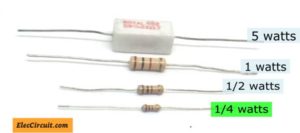
Resistors are one of the most fundamental components in electronic circuits. They control the flow of electric current by providing resistance, which helps protect sensitive parts and ensure devices work correctly. Understanding resistors can make a big difference when you build or repair electronics.
Function And Purpose
Resistors limit the amount of current flowing through a circuit. By doing so, they prevent damage to other components that might be sensitive to high current levels.
They also help divide voltage and control signal levels, which is crucial for precise circuit operation. Have you ever wondered how your smartphone manages so many functions without frying its delicate parts? Resistors play a key role in that process.
Types Of Resistors
Resistors come in various types, each suited for specific tasks. Here are some common ones:
- Fixed Resistors:These have a set resistance value and are widely used in everyday electronics.
- Variable Resistors (Potentiometers):Allow you to adjust resistance manually, useful for tuning circuits.
- Thermistors:Change resistance based on temperature, often used in temperature sensing.
- Photoresistors:React to light levels by changing resistance, used in light-sensitive applications.
Choosing the right resistor type can affect the performance and reliability of your device.
Common Applications
Resistors are everywhere in electronics. You find them in simple gadgets like flashlights to complex devices like computers.
- They protect LEDs by limiting current to avoid burnout.
- They help set audio volume levels in radios and amplifiers.
- In sensor circuits, resistors help calibrate signals for accurate readings.
- Resistors also play a role in timing circuits, working with capacitors to control how long a circuit stays active.
Next time you use an electronic device, think about how many resistors are quietly working to keep it running smoothly. What device would you be curious to open up and identify the resistors inside?
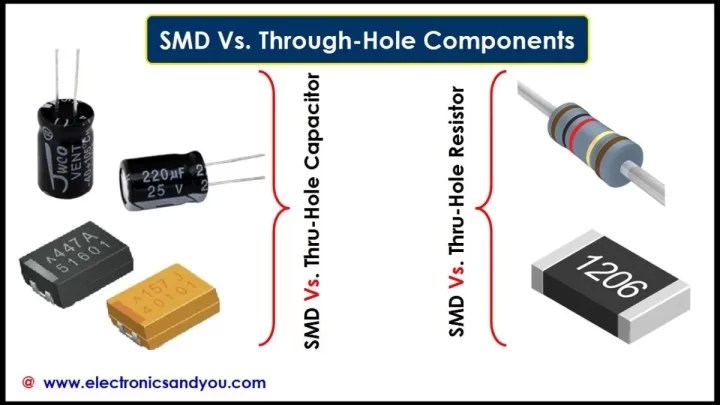
Credit: www.electronicsandyou.com
Capacitors
Capacitors are essential electronic components found in almost every circuit. They store and release electrical energy quickly. Their ability to hold charge makes them useful in many devices. Capacitors help control voltage and smooth out power supply fluctuations.
How Capacitors Work
A capacitor consists of two metal plates separated by an insulator called a dielectric. When voltage is applied, electric charge builds on the plates. The capacitor stores this energy in the electric field between plates. It releases the energy when the circuit needs it. Capacitors block direct current but allow alternating current to pass.
Different Capacitor Types
- Ceramic Capacitors:Small, cheap, and used for high-frequency circuits.
- Electrolytic Capacitors:Larger, with high capacitance, used in power supplies.
- Tantalum Capacitors:Stable and reliable, used in audio and medical devices.
- Film Capacitors:Durable and precise, used in filters and amplifiers.
Usage In Circuits
Capacitors serve many purposes in circuits. They smooth voltage fluctuations to protect sensitive components. They filter out noise in audio and radio signals. Capacitors also help start motors by providing extra energy. Timing circuits use them to control delays and oscillations. Their fast charge and discharge make them vital in many electronic devices.
Inductors
Inductors are key components in many electronic circuits. They store energy in a magnetic field when electric current passes through them. This ability makes inductors crucial for managing current and voltage in devices. They often look like coils of wire wrapped around a core.
Role In Electronic Circuits
Inductors resist changes in current flow. This property helps smooth out electrical signals. They work with capacitors and resistors to filter signals and block noise. Inductors also store energy temporarily for power supplies. Their magnetic field can induce voltage in other parts of a circuit.
Varieties Of Inductors
- Air Core Inductors:Simple coils without a magnetic core. Used in high-frequency circuits.
- Iron Core Inductors:Coils wrapped around iron cores. Provide stronger magnetic fields and higher inductance.
- Ferrite Core Inductors:Use ferrite material for cores. Common in radio frequency applications.
- Toroidal Inductors:Wire wound on a donut-shaped core. Efficient and compact.
- Variable Inductors:Inductance can be adjusted by moving the core or coil.
Applications In Electronics
Inductors appear in many devices and systems. They help filter signals in radios and TVs. Power supplies use inductors to regulate voltage and current. Inductors support transformers for changing voltage levels. They also play a role in tuning circuits and energy storage in switching power supplies.
Diodes
Diodes are essential electronic components that control the flow of electric current. They allow current to pass in one direction while blocking it in the opposite direction. This simple yet vital function makes diodes crucial in many electronic circuits.
Basic Functionality
A diode acts like a one-way valve for electricity. It has two terminals: anode and cathode. When the anode is positive relative to the cathode, current flows through the diode. If the polarity reverses, the diode blocks the current. This property is called rectification.
Types Of Diodes
- Standard Diode:Used for general rectification.
- Zener Diode:Allows current to flow backward at a set voltage.
- Light Emitting Diode (LED):Emits light when current passes through.
- Schottky Diode:Has a low voltage drop and fast switching speed.
- Photodiode:Converts light into electrical current.
Practical Uses
- Converting AC to DC in power supplies.
- Protecting circuits by blocking reverse voltage.
- Creating light sources with LEDs.
- Voltage regulation using Zener diodes.
- Detecting light intensity with photodiodes.
Transistors
Transistors are tiny electronic components that control electric signals. They act like switches or amplifiers inside circuits. These parts are crucial for almost every electronic device today. Without transistors, modern gadgets would not work efficiently or be as small as they are.
Operation And Importance
Transistors control the flow of electric current. They have three parts: the emitter, base, and collector. A small current at the base controls a larger current between the emitter and collector. This ability lets transistors amplify signals or switch them on and off quickly.
The importance of transistors lies in their speed and size. They replaced bulky vacuum tubes, making devices faster and smaller. Transistors use less power and last longer, improving device reliability.
Types Of Transistors
- Bipolar Junction Transistors (BJT):Use both electrons and holes to conduct current. Common in analog circuits.
- Field-Effect Transistors (FET):Control current using voltage applied to the gate. Widely used in digital circuits.
- Metal-Oxide-Semiconductor FET (MOSFET):A popular FET type, essential in computer chips.
- Darlington Transistors:Combine two BJTs for higher current gain.
Applications In Devices
Transistors appear in many devices, from small to large. They amplify sound in speakers and radios. They switch signals in computers and smartphones. Power transistors control motors and lights in appliances. Transistors also help in signal processing and data storage.

Credit: www.electronicsandyou.com
Integrated Circuits
Integrated circuits (ICs) are at the heart of almost every electronic device you use daily. These tiny chips pack countless electronic components into a small package, making complex functions possible without bulky hardware. Understanding ICs can help you see how modern electronics achieve high performance in compact sizes.
Components And Functionality
An integrated circuit combines several electronic components such as transistors, resistors, diodes, and capacitors onto a single semiconductor chip. These components work together to perform specific tasks like amplification, signal processing, or computation.
Think of an IC as a mini electronic system that can replace multiple discrete parts. This integration reduces size, cost, and power consumption while increasing reliability.
Categories Of Integrated Circuits
ICs come in various types based on their complexity and purpose:
- Analog ICs:Handle continuous signals, used in amplifiers and sensors.
- Digital ICs:Process binary data, found in microprocessors and memory chips.
- Mixed-Signal ICs:Combine analog and digital functions, common in communication devices.
Each category fits different needs in electronics. Which type do you encounter most in your gadgets?
Usage In Modern Electronics
Integrated circuits are everywhere—from your smartphone to kitchen appliances. They enable devices to be smarter and more efficient.
For instance, the microprocessor in your computer is an IC that executes millions of instructions per second. Without ICs, developing such powerful yet compact devices would be impossible.
Next time you use an electronic device, consider the tiny IC inside that makes it all work seamlessly. How might your understanding of ICs influence your approach to choosing or repairing electronics?
Switches And Relays
Switches and relays are key components in electronic circuits. They control the flow of electricity by opening or closing electrical paths. This control allows devices to turn on or off, change modes, or protect circuits from damage. Understanding their roles helps to grasp how electronic systems work.
Purpose And Function
Switches allow users to manually control electrical circuits. They connect or disconnect the current flow. Relays perform similar tasks but operate automatically. Relays use a small electrical signal to control a larger current. This protects sensitive parts of a circuit while managing high power loads.
Different Types
- Switches:Toggle, push-button, slide, rotary, and DIP switches.
- Relays:Electromechanical, solid-state, reed, and thermal relays.
Each type serves specific purposes based on design and function. Switches vary by how users interact with them. Relays differ in how they activate and handle loads.
Applications In Systems
Switches appear in everyday devices like lights, computers, and appliances. They let users start or stop devices easily. Relays find use in automation, vehicles, and safety systems. They control motors, alarms, and power circuits without user action. Both ensure efficient and safe operation of electronic systems.
Sensors
Sensors are fundamental electronic components that detect changes in the environment and convert these changes into electrical signals. They act as the eyes, ears, and skin of electronic systems, enabling devices to interact intelligently with the physical world. Understanding sensors can help you appreciate how your gadgets respond to their surroundings and improve your ability to troubleshoot or innovate with electronics.
Role In Electronics
Sensors gather information about physical parameters like temperature, light, motion, and pressure. This data helps electronic systems make decisions or trigger actions automatically. Without sensors, devices would be unable to adapt or respond to real-world conditions, making them less useful and less efficient.
Think about your smartphone’s ability to adjust screen brightness based on ambient light. This feature relies on a sensor detecting the light level around you and sending that data to the phone’s processor. Sensors bridge the gap between the physical world and digital electronics, making smart technology possible.
Various Types
There are many types of sensors, each designed to detect specific kinds of input:
- Temperature sensors:Measure heat and cold, like thermistors or infrared sensors.
- Proximity sensors:Detect how close an object is, such as capacitive or ultrasonic sensors.
- Light sensors:Measure light intensity, commonly photodiodes or phototransistors.
- Motion sensors:Detect movement, including accelerometers and gyroscopes.
- Pressure sensors:Measure force applied to a surface, often used in touchscreens and weather instruments.
Each sensor type converts physical input into an electrical output that electronics can use, making their choice critical based on your project’s needs.
Applications In Everyday Life
Sensors are everywhere in daily life, quietly making things work better. Your car uses sensors to monitor tire pressure and engine temperature, helping keep you safe on the road. At home, motion sensors turn lights on when you enter a room, saving energy without you lifting a finger.
Have you ever wondered how fitness trackers count your steps or measure your heart rate? Sensors inside these devices collect real-time data to give you health insights instantly. Even household appliances like refrigerators use sensors to adjust cooling and keep your food fresh longer.
Power Sources
Power sources are the heart of any electronic device. Without a reliable power source, your circuit won’t function, no matter how well-designed it is. Understanding the different types of power sources helps you choose the right one for your project, ensuring efficiency and longevity.
Types Of Power Supplies
Power supplies come in various forms, each suited for specific needs. The most common types include:
- AC Power Supplies:These convert alternating current from the wall outlet into usable DC power for circuits.
- DC Power Supplies:Provide a steady direct current output, essential for sensitive electronics.
- Regulated Power Supplies:Maintain a constant voltage output, even when input voltage or load changes.
- Unregulated Power Supplies:Simpler and cheaper but less stable, useful in non-critical applications.
Choosing between these depends on your circuit’s voltage requirements and stability needs. Have you checked if your device needs a regulated or unregulated supply?
Batteries And Their Role
Batteries are portable power sources that let your devices work without being plugged in. They come in many types, such as alkaline, lithium-ion, and nickel-metal hydride, each with unique strengths.
Lithium-ion batteries, for example, offer high energy density and are common in smartphones and laptops. Alkaline batteries are cheap and great for low-drain devices like remote controls.
Understanding battery capacity and discharge rates can save you from unexpected shutdowns. How often do you check your battery’s health before it fails you?
Power Management In Circuits
Efficient power management ensures your circuit uses energy wisely and prolongs component life. This includes techniques like voltage regulation, power switching, and energy harvesting.
Using voltage regulators can protect sensitive components from voltage spikes. Power switching, such as turning off parts of a circuit when not needed, can save battery life.
Have you considered how power management could extend your device’s operational time or reduce heat generation?
Credit: www.eleccircuit.com
Frequently Asked Questions
What Are The Main Types Of Electronic Components?
The main electronic components include resistors, capacitors, inductors, diodes, and transistors. These parts control electrical signals and power in circuits.
How Do Resistors Function In Electronic Circuits?
Resistors limit the flow of electric current. They protect sensitive components and control voltage levels in circuits.
Why Are Capacitors Important In Electronics?
Capacitors store and release electrical energy. They smooth power supply fluctuations and filter signals in circuits.
What Role Do Transistors Play In Electronics?
Transistors amplify electrical signals and act as switches. They are essential for digital and analog circuit operations.
Conclusion
Electronic components build every device we use daily. Resistors, capacitors, and transistors control electric flow. Diodes allow current in one direction only. Integrated circuits combine many parts into one chip. Understanding these parts helps you learn how gadgets work. Each component plays a simple but important role.
Knowing them makes electronics less confusing and more fun. Keep exploring to see how these parts connect. Small pieces, big impact.