What are the Components of Electronics: Essential Parts Explained
Have you ever wondered what makes your favorite gadgets work? Whether it’s your smartphone, TV, or even a simple remote control, all these devices rely on tiny parts working together.
These parts are called electronic components, and understanding them can open up a whole new world for you. You’ll discover the key components of electronics, how they function, and why they are essential for every device you use daily. Keep reading to unlock the secrets behind the technology that powers your life!
Resistors
Resistors are one of the fundamental components in electronics. They control the flow of electric current by providing resistance. Understanding resistors helps you design circuits that work efficiently and safely.
Types Of Resistors
Resistors come in various types, each designed for specific uses. The most common are:
- Fixed Resistors: Provide a constant resistance value, such as carbon film and metal film resistors.
- Variable Resistors: Allow you to adjust the resistance manually, like potentiometers and rheostats.
- Special Resistors: Include thermistors and photoresistors, which change resistance based on temperature or light.
Have you ever adjusted a volume knob? That’s a variable resistor in action.
Functions In Circuits
Resistors serve several important roles in circuits. They limit current to protect sensitive components like LEDs.
They also divide voltage, which helps in creating reference voltages or biasing transistors.
Another key function is shaping signal waveforms, essential in audio and timing circuits. What would happen if you removed a resistor from a circuit? Chances are, the device wouldn’t work properly or could even be damaged.
Common Applications
Resistors appear everywhere in electronics, from household gadgets to industrial machines.
- In LED lights, resistors control brightness and prevent burnout.
- In sensors, they help condition signals for accurate readings.
- Resistors also play a role in power supplies, ensuring stable voltage outputs.
Next time you turn on a device, think about how many resistors are quietly doing their job behind the scenes.
Capacitors
Capacitors are key components in electronics. They store and release electrical energy quickly. This ability makes them vital in many circuits. Capacitors help manage power flow and filter signals. Their function supports smooth operation in electronic devices.
Different Capacitor Types
Capacitors come in various types. Each type suits specific uses based on size and material. Common types include:
- Ceramic capacitors – small and stable for high-frequency circuits.
- Electrolytic capacitors – larger and used for energy storage.
- Tantalum capacitors – reliable with long life in compact forms.
- Film capacitors – known for accuracy and low loss.
Role In Energy Storage
Capacitors store electric charge on two plates separated by an insulator. This stored energy can release instantly when needed. This feature helps smooth power supply changes. Capacitors also provide quick bursts of energy for circuits.
Usage In Electronic Devices
Capacitors appear in many devices. They help stabilize voltage and power flow. In radios, capacitors tune frequencies. In computers, they smooth power to chips. They also filter noise in audio equipment. Capacitors protect circuits from sudden power spikes.
Inductors
Inductors are essential components in many electronic circuits. They store energy in a magnetic field when electric current passes through them. Inductors resist changes in current, making them useful for filtering and tuning signals. They come in different shapes and sizes to suit various needs.
Inductor Varieties
There are several types of inductors, each designed for specific uses:
- Air-core inductors:No magnetic core inside, used for high-frequency circuits.
- Iron-core inductors:Contain iron to increase inductance, common in power supplies.
- Ferrite-core inductors:Use ferrite material for efficient energy storage and low loss.
- Toroidal inductors:Shaped like a donut, reduce electromagnetic interference.
Magnetic Field And Energy
When current flows through an inductor, it creates a magnetic field around the coil. This field stores energy temporarily. The strength of the field depends on the current and the coil’s properties. The magnetic field collapses when the current stops, releasing stored energy back into the circuit.
Applications In Electronics
Inductors are found in many electronic devices and systems. They help smooth out electrical signals in power supplies. They are key in radio circuits for tuning frequencies. Inductors also protect circuits by blocking sudden spikes in current. In filters, they separate signals by frequency, improving sound and data quality.

Credit: www.electronicsandyou.com
Diodes
Diodes are fundamental components in electronics, acting as one-way gates for electric current. They allow current to flow in a single direction while blocking it in the opposite direction. Understanding how diodes work and their different types can help you design better circuits and troubleshoot common issues effectively.
Semiconductor Basics
At the heart of every diode is a semiconductor material, usually silicon. This material has properties between a conductor and an insulator, which makes controlling electric current possible. The diode consists of two regions: the p-typewith positive charge carriers (holes) and the n-typewith negative charge carriers (electrons).
When these two regions meet, they form a p-n junction. This junction controls the flow of current by allowing it to pass only when the diode is forward-biased (positive voltage on the p-side). If you’ve ever tried to connect a diode backwards, you’ve experienced how it blocks current—this is due to the junction’s nature.
Rectification And Regulation
One of the most common uses of diodes is in rectification, which converts alternating current (AC) to direct current (DC). You’ll find diodes inside power adapters and chargers performing this exact job. They allow the positive half of the AC waveform to pass while blocking the negative half, smoothing the output into usable DC power.
Diodes also help in voltage regulation by stabilizing voltage levels in circuits. Zener diodes, for example, maintain a constant voltage by allowing current to flow backwards when the voltage exceeds a certain threshold. This feature protects sensitive components from voltage spikes.
Specialty Diodes
Beyond standard diodes, specialty diodes serve unique functions in electronics. Light Emitting Diodes (LEDs)convert electrical energy into light and are widely used for indicators and displays. Their efficiency and long life make them preferable over traditional bulbs.
Other specialty diodes include Schottky diodes, known for their fast switching and low forward voltage drop, making them ideal in high-speed circuits. Photodiodesrespond to light and are used in sensors and communication devices. Knowing these variations helps you pick the right diode for your project’s specific needs.
Transistors
Transistors are tiny but powerful components that have transformed electronics. These semiconductor devices control electrical signals and power in countless gadgets you use daily. Understanding transistors helps you appreciate how modern electronics function at their core.
Transistor Types
There are mainly two types of transistors you should know about:
- Bipolar Junction Transistors (BJT):These have three layers called emitter, base, and collector. They control current flow using both electrons and holes.
- Field Effect Transistors (FET):These use voltage to control current flow and include types like MOSFETs, which are common in digital circuits.
Which type you choose depends on your circuit’s needs—current control or voltage control.
Amplification And Switching
Transistors can amplify weak electrical signals, making sounds louder or boosting radio waves. They can also act as switches, turning current on or off instantly.
Think about how your smartphone processes signals—transistors switch on and off billions of times per second to handle data and calls. This dual role makes transistors incredibly versatile and essential.
Role In Modern Electronics
Without transistors, devices like computers, smartphones, and TVs wouldn’t exist. They form the building blocks of microprocessors and memory chips.
Have you ever considered how your laptop manages to be so powerful yet compact? It’s thanks to millions of transistors packed into a tiny space, working tirelessly to process information.
Integrated Circuits
Integrated circuits are the silent heroes inside almost every electronic device you use daily. These tiny components pack thousands, sometimes millions, of electronic parts onto a small chip, making complex functions possible in a compact form. Understanding what integrated circuits are and how they work gives you a clearer view of the technology shaping your world.
Microchips Explained
At the core of an integrated circuit is the microchip. This small piece of semiconductor material, usually silicon, contains numerous tiny components such as transistors, resistors, and capacitors. These components work together to process signals and perform specific tasks.
Think of a microchip as a miniature city, with each transistor acting like a building that either allows or blocks electrical current. The more transistors packed into the microchip, the more powerful and efficient the device becomes. Have you ever wondered how your smartphone fits so much power into such a small space? Microchips are the answer.
Functionality And Design
Integrated circuits are designed with precise layouts to ensure they perform specific functions like amplification, data processing, or signal modulation. Designers use software tools to map out the circuit paths and component placements before fabrication.
This meticulous design process allows circuits to be mass-produced with consistency and reliability. You can find integrated circuits in various forms, from simple logic gates to complex processors. What functions would you like a tiny chip inside your gadgets to handle?
Impact On Technology
Integrated circuits have transformed technology by making devices smaller, faster, and more energy-efficient. Without them, computers would be bulky, and electronics would lack the speed and power we now take for granted.
They have also lowered costs, making technology accessible to more people around the world. Next time you use your laptop or smart appliance, consider how integrated circuits quietly drive innovation behind the scenes.
Switches
Switches are fundamental components in electronics, acting as gatekeepers for electrical current. They control the flow of electricity by opening or closing a circuit, which turns devices on or off. Understanding the types and functions of switches can help you design or troubleshoot circuits more effectively.
Mechanical Vs. Electronic
Mechanical switches rely on physical movement to connect or disconnect a circuit. You can feel the click when you press a button or flip a toggle switch, which gives you tactile feedback. Examples include push buttons, toggle switches, and rotary switches.
Electronic switches, on the other hand, use semiconductor devices like transistors or MOSFETs to control the current flow without moving parts. They switch faster, last longer, and are quieter since there’s no mechanical wear. You’ll find electronic switches in microcontrollers and integrated circuits.
Which type fits your project depends on your needs. Do you want a simple user interface with physical control, or do you need rapid and silent switching inside complex electronics?
Applications In Circuit Control
Switches play a vital role in controlling circuits in everyday devices. They allow you to power gadgets on and off, select different modes, or reset systems. For example, the power button on your laptop is a switch that manages the main circuit.
In more complex setups, switches help route signals, control motor directions, or even act as safety devices to prevent overloads. Think about how a light dimmer switch adjusts brightness by controlling the current flow.
Have you ever considered how switches can add versatility to your projects? Adding different types of switches can improve user experience and system reliability.

Credit: www.youtube.com
Connectors
Connectors are the unsung heroes of electronic devices. They serve as the physical link between different components, allowing signals and power to flow smoothly. Without connectors, assembling and repairing electronic systems would be far more complicated and time-consuming.
Types Of Connectors
Connectors come in many shapes and sizes, each designed for specific tasks. Some common types include:
- Pin connectors:Often used on circuit boards to connect wires or cables.
- USB connectors:Ubiquitous in data transfer and charging devices.
- Coaxial connectors:Ideal for high-frequency signals like TV and internet.
- Ribbon cable connectors:Used to connect multiple wires in a flat, organized form.
- Terminal blocks:Useful for connecting wires securely in industrial equipment.
Each type has unique features suited for different electronic environments. Have you ever noticed how different your phone charger connector feels compared to a headphone jack? That’s a design choice based on usage needs.
Importance In Electronic Systems
Connectors make electronic systems flexible and easier to maintain. They allow you to replace or upgrade parts without rewiring the entire device. Imagine trying to fix your laptop without connectors—you’d have to solder wires directly every time.
Good connectors ensure stable connections, reducing the risk of signal loss or power failure. They also help protect sensitive components from damage due to loose or improper connections. When you choose connectors, you’re not just adding a component; you’re ensuring reliability and longevity.
Sensors
Sensors are essential components in electronics that detect changes in the environment. They convert physical signals into data that devices can process. Sensors enable machines to understand and interact with the world around them. This ability makes modern technology more responsive and intelligent.
Varieties Of Sensors
There are many types of sensors, each designed for specific tasks. Common varieties include:
- Temperature sensors – measure heat levels
- Light sensors – detect brightness
- Motion sensors – sense movement
- Pressure sensors – measure force or weight
- Proximity sensors – detect nearby objects
- Humidity sensors – measure moisture in the air
Each sensor type serves unique functions in electronic systems.
Role In Data Collection
Sensors gather real-time data from their surroundings. This data helps devices make decisions and respond correctly. For example, a temperature sensor can trigger a fan when it gets too hot. Sensors provide accurate and timely information needed for automation and control. They are the eyes and ears of electronic devices.
Integration In Devices
Sensors are built into many electronic products to enhance functionality. Smartphones use sensors for touch and orientation detection. Cars rely on sensors for safety features like airbags and parking assistance. Industrial machines use sensors to monitor conditions and prevent failures. Integration allows devices to operate smoothly and adapt to changes instantly.

Credit: www.youtube.com
Power Sources
Power sources are essential components in any electronic device. They provide the energy needed for circuits to work. Without power sources, electronic devices cannot operate. Understanding different types of power sources helps in choosing the right one for your project. Power sources can be simple, like batteries, or complex, like power supplies. Both serve to deliver the correct voltage and current to electronic circuits.
Batteries And Power Supplies
Batteries store chemical energy and convert it into electrical energy. They come in many types, such as alkaline, lithium-ion, and nickel-metal hydride. Batteries are portable and easy to use. They provide DC (direct current) power, which is common in most electronics.
Power supplies convert AC (alternating current) from the wall outlet into DC power. They regulate voltage and current to safe levels for circuits. Power supplies can be linear or switching types. Switching power supplies are more efficient and lighter.
Role In Sustaining Circuits
Power sources keep electronic circuits running smoothly. They maintain constant voltage, preventing device failure. A stable power supply ensures components work within safe limits. Without proper power, circuits may overheat or stop working.
Power sources also affect device performance and lifespan. Good power quality reduces noise and interference. This leads to better signal clarity and device reliability. Choosing the right power source is crucial for any electronic project.
Frequently Asked Questions
What Are The Basic Components Of Electronics?
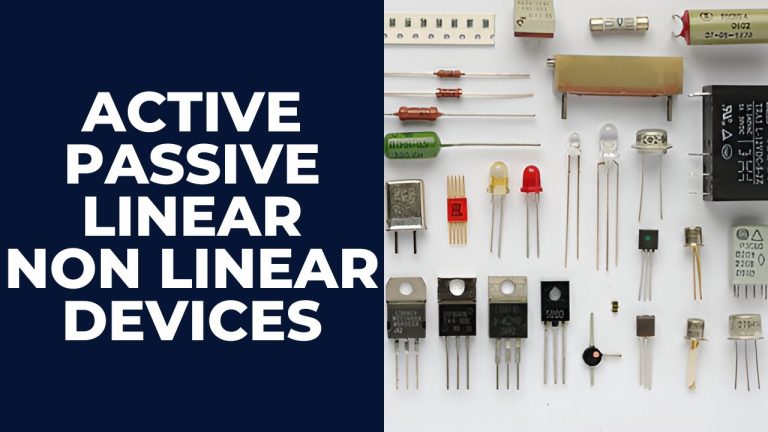
Basic electronics components include resistors, capacitors, inductors, diodes, and transistors. These parts control electric current and voltage in circuits.
How Do Resistors Function In Electronic Circuits?
Resistors limit electric current flow and divide voltages. They protect sensitive components by controlling current levels in circuits.
What Role Do Capacitors Play In Electronics?
Capacitors store and release electrical energy. They filter signals, smooth power supply fluctuations, and enable timing functions.
Why Are Transistors Important In Electronic Devices?
Transistors amplify or switch electronic signals. They are essential for building amplifiers, switches, and digital logic circuits.
Conclusion
Electronics include many parts that work together. Resistors, capacitors, and transistors play key roles. Each component has a specific job to do. Understanding these parts helps you learn how devices work. Small parts make big things possible. Knowing the basics can spark your curiosity.
Keep exploring to see how electronics shape our world. Simple components build complex systems. It all starts with these basic elements.