What are Active Components in Electronics: Key Insights Explained
Have you ever wondered what makes your electronic devices come alive? The secret lies in something called active components.
These tiny parts play a crucial role in controlling and amplifying electrical signals, turning simple circuits into powerful tools. Understanding what active components are can help you unlock the mysteries behind your gadgets and even inspire you to create your own electronic projects.
Stick with me, and you’ll discover exactly how these components work and why they matter to you.

Credit: www.reddit.com
Active Components Overview
Active components play a key role in electronics. They control the flow of electric current and amplify signals. These components need a power source to work. Unlike passive components, active ones can inject energy into a circuit. They help devices perform tasks like switching, amplifying, and processing signals.
Understanding active components is essential for anyone learning electronics. They form the heart of many electronic systems. Below, we explore the main types and functions of active components.
What Are Active Components?
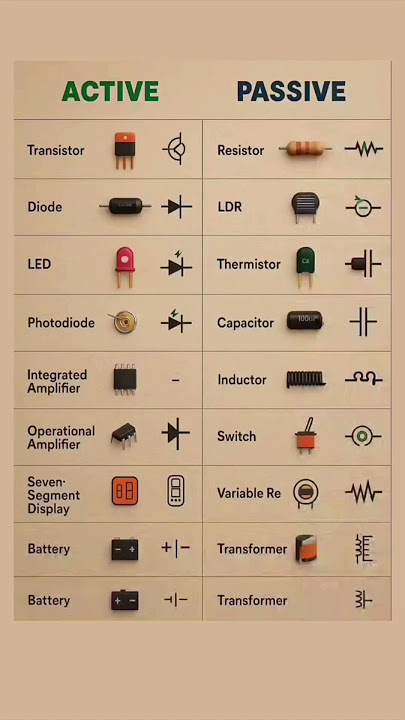
Active components are electronic parts that can control electric current. They require an external power supply to operate. These components can amplify signals or switch electrical power on and off. Examples include transistors, diodes, and integrated circuits.
Key Functions Of Active Components
- Amplify weak electrical signals
- Switch electric current in circuits
- Generate electrical signals
- Control voltage and current flow
Examples Of Common Active Components
| Component | Main Function | Usage |
|---|---|---|
| Transistor | Amplifies and switches signals | Radios, computers, amplifiers |
| Diode | Allows current in one direction | Rectifiers, signal demodulation |
| Integrated Circuit (IC) | Performs complex functions | Computers, mobile phones, electronics |

Credit: www.microwavejournal.com
Characteristics Of Active Components
Active components play a vital role in electronic circuits. They can control the flow of electricity and amplify signals. These components need power to work and can add energy to a circuit. Understanding their characteristics helps in designing efficient electronic devices.
Ability to Amplify Signals
Active components can increase the strength of weak electrical signals. This makes them essential in devices like radios and amplifiers. Without this feature, many electronic systems would not function properly.
Requirement of External Power
Active components need an external power source to operate. This power allows them to control current and voltage. Unlike passive parts, they cannot work with just the energy in the circuit.
Control of Current Flow
These components can regulate how much current passes through a circuit. This control is crucial for tasks like switching and signal processing. It helps in managing the circuit’s overall behavior.
Non-linear Behavior
Active components often show non-linear responses to voltage and current. This means their output is not directly proportional to input. This property is useful in creating oscillators and other complex circuits.
Energy Generation and Conversion
Some active components can generate or convert energy within a circuit. For example, transistors can convert small input signals into larger outputs. This feature supports many electronic applications.
Types Of Active Components
Active components are essential parts of electronic circuits. They control the flow of electricity and can amplify signals. These components need an external power source to work. Different types of active components serve specific functions. Understanding these types helps in designing and repairing electronic devices.
Transistors
Transistors are tiny switches or amplifiers in electronics. They control electric current between two points. Transistors can turn signals on or off quickly. They help increase the strength of weak signals. These components are found in radios, computers, and many gadgets.
Diodes
Diodes allow electric current to flow in one direction only. They protect circuits from damage by blocking reverse current. Light Emitting Diodes (LEDs) are a popular type that emits light. Diodes are used in power supplies and signal processing. They ensure proper direction of electric flow in circuits.
Integrated Circuits
Integrated Circuits (ICs) combine many active components in one small chip. They perform complex tasks like processing data and controlling devices. ICs make electronics smaller, faster, and more reliable. Common examples include microprocessors and memory chips. They are the heart of modern electronic devices.
Transistors In Electronics
Transistors are crucial components in electronics. They control the flow of electric current and act as switches or amplifiers. Without transistors, modern electronics like computers and smartphones would not exist. Understanding different types of transistors helps grasp their functions better.
Bipolar Junction Transistors
Bipolar Junction Transistors (BJTs) have three layers of semiconductor material. These layers are called the emitter, base, and collector. BJTs control current by using a small input current at the base to control a larger current between emitter and collector. They are widely used in amplification and switching circuits. BJTs come in two types: NPN and PNP, depending on the arrangement of semiconductor materials.
Field Effect Transistors
Field Effect Transistors (FETs) control current by using an electric field. They have three terminals: gate, source, and drain. FETs work by changing the width of a channel through which current flows. These transistors use voltage at the gate to control current flow between source and drain. They consume less power than BJTs and are common in digital circuits. Types of FETs include MOSFETs, JFETs, and MESFETs.
Role Of Diodes
Diodes play a crucial role in electronics as active components. They control the direction of electrical current, allowing it to flow in one direction only. This property makes diodes essential for many electronic circuits. Diodes help in converting, regulating, and signaling electric signals.
Rectifier Diodes
Rectifier diodes convert alternating current (AC) to direct current (DC). They allow current to pass during the positive half-cycle and block it during the negative half-cycle. This process is called rectification. Rectifier diodes are widely used in power supplies for electronic devices.
Zener Diodes
Zener diodes regulate voltage in a circuit. They allow current to flow backward when the voltage exceeds a certain value, called the breakdown voltage. This helps protect sensitive components from voltage spikes. Zener diodes maintain a stable voltage, improving circuit reliability.
Light Emitting Diodes
Light Emitting Diodes (LEDs) emit light when current passes through them. They are energy-efficient and last longer than traditional bulbs. LEDs are used in displays, indicators, and lighting. Their small size and bright output make them popular in many applications.
Understanding Integrated Circuits
Understanding integrated circuits (ICs) is essential for anyone interested in electronics. These tiny chips pack a vast number of electronic components into a small space, enabling complex functions within devices you use daily. Knowing the difference between analog and digital ICs will help you grasp how your gadgets really work.
Analog Integrated Circuits
Analog ICs handle continuous signals that vary over time, like sound or temperature. They amplify, filter, or modify these signals to make them useful. Think about the volume control on your speaker—analog ICs are behind that smooth adjustment.
Common examples include operational amplifiers and voltage regulators. These ICs often work with sensors or audio devices. Have you ever wondered how your microphone captures your voice so clearly? Analog ICs play a big role in that process.
Digital Integrated Circuits
Digital ICs work with discrete signals, typically represented as 0s and 1s. These chips perform logic operations, store data, and control systems in computers and smartphones. The microprocessor inside your laptop is a complex digital IC managing billions of calculations per second.
Examples include microcontrollers, memory chips, and logic gates. Digital ICs enable devices to process information quickly and accurately. Next time you use your phone, consider how digital ICs make it possible to send messages instantly or browse the web seamlessly.
Applications Of Active Components
Active components are vital in many electronic devices. They control the flow of electricity and help process signals. These components power up circuits and allow devices to perform complex tasks. Their applications range from simple gadgets to advanced systems.
Signal Amplification
Active components boost weak electrical signals to stronger levels. This process is called amplification. It helps devices like radios and microphones work clearly. Amplifiers use transistors or vacuum tubes to increase signal strength. Without amplification, many audio and communication devices would fail.
Switching Operations
Active components also act as switches in electronic circuits. They control the flow of current by turning it on or off. This switching ability is crucial in computers and digital devices. Transistors are the most common active components used for switching. They enable fast, reliable operation in modern electronics.
Advantages Of Active Components
Active components play a vital role in electronic circuits. They control the flow of electric current and amplify signals. These components bring many benefits that passive parts cannot offer. Understanding these advantages helps in grasping why active components are essential in electronics.
Amplification Capability
Active components can increase signal strength. This makes weak signals stronger and easier to process. Amplification is crucial in devices like radios and microphones.
Signal Control And Switching
They enable control over electrical signals. Active components can turn signals on or off quickly. This ability is key in digital circuits and computing.
Power Gain
Active components provide power gain to circuits. They can deliver more power than they consume. This helps in driving larger loads like speakers and motors.
Improved Circuit Functionality
They allow complex circuit designs with many functions. Active components support oscillators, amplifiers, and timers. This leads to more versatile and efficient electronics.
Signal Modulation
Active components help in modulating signals for communication. They change signal properties to carry information. This is important in radios and televisions.
Compact And Efficient Designs
Using active components reduces the size of circuits. They perform multiple tasks in a small package. This supports the development of compact electronic devices.
Challenges In Using Active Components
Active components, like transistors and integrated circuits, are essential in electronics, but using them isn’t always straightforward. You’ll face challenges that can affect your circuit’s performance and reliability. Understanding these hurdles helps you design better and avoid costly mistakes.
Thermal Management Issues
Active components generate heat when operating, sometimes more than you expect. If you don’t manage this heat well, components can overheat and fail prematurely.
Think about a project where your transistor heated up quickly under load. Adding a simple heat sink or improving airflow made a huge difference. Can you spot where heat might build up in your design?
Complexity in Biasing and Control
Active components often require precise voltage or current settings to work correctly. If the biasing is off, the component might not function or could even get damaged.
For example, setting up a transistor amplifier without the right bias can cause distortion or no output at all. Have you checked your bias points carefully in your circuits?
Susceptibility to Noise and Interference
Noise can severely affect active components, especially in sensitive circuits like amplifiers or radio receivers. Even small external signals might cause unexpected behavior.
Shielding and proper grounding are crucial to keep noise out. What steps have you taken to reduce interference in your projects?
Limited Lifespan and Reliability Concerns
Active components can degrade over time due to electrical stress or environmental factors. This wear can lead to circuit failures, sometimes without warning.
Regular testing and choosing components rated for your operating conditions help improve reliability. How often do you test your circuits for aging effects?
Power Supply Sensitivity
Many active components need a stable power supply. Fluctuations can cause erratic operation or permanent damage.
Using voltage regulators and filtering capacitors can protect your components. Is your power supply clean and stable enough for your active parts?

Credit: www.electronicsandyou.com
Frequently Asked Questions
What Are Active Components In Electronics?
Active components are electronic devices that can amplify or control electric signals. They require an external power source to operate. Examples include transistors, diodes, and integrated circuits. These components are essential for signal processing and circuit functionality.
How Do Active Components Differ From Passive Ones?
Active components control current flow and can amplify signals. Passive components, like resistors and capacitors, cannot amplify. Active devices need power to function, while passive devices do not. This fundamental difference defines their roles in electronic circuits.
Why Are Transistors Important As Active Components?
Transistors act as switches or amplifiers in circuits. They control signal flow and enable complex electronic functions. Transistors are key in modern electronics, making devices smaller and more efficient. Their ability to amplify signals is crucial in communication and computing.
Can Diodes Be Considered Active Components?
Yes, diodes are active components because they control current direction. They allow current to flow in one direction only. Diodes need external power to operate within circuits. They are vital for rectification and signal modulation.
Conclusion
Active components control the flow of electricity in circuits. They can amplify signals or switch currents on and off. Common examples include transistors, diodes, and integrated circuits. These parts make electronic devices work properly. Understanding them helps you learn how electronics function.
Keep exploring to see how these parts fit in daily gadgets. Electronics become clearer when you know their active components. Simple but vital parts in every electronic system.