What Electronic Components were Used to Create Boolean Logic Gates: Essential Guide
Have you ever wondered what makes your computer think and decide? At the heart of every digital device are Boolean logic gates, the tiny building blocks that process information.
But what electronic components bring these gates to life? Understanding the parts behind these gates will open your eyes to how your gadgets really work. Keep reading, and you’ll discover the simple yet powerful components that form the foundation of all modern electronics.
This knowledge could change the way you see technology forever.
Credit: medium.com
Basics Of Boolean Logic Gates
Boolean logic gates are the foundation of all digital circuits. They take one or more binary inputs—values that are either 0 or 1—and produce a single binary output. Understanding these gates helps you grasp how computers and electronic devices make decisions and process information.
Each gate represents a basic logical operation, such as AND, OR, or NOT. These operations mimic the way we use true/false statements in everyday reasoning. Knowing how these gates work will give you insight into the building blocks of modern electronics.
What Are Boolean Logic Gates?
Boolean logic gates are electronic devices that perform logical operations on binary inputs. They follow rules from Boolean algebra, a branch of mathematics focused on true/false values. By combining these gates, complex decision-making systems emerge.
Think about a simple question: “Is it raining AND do I have an umbrella?” Only if both answers are yes does the overall statement become true. Boolean gates work similarly but with electrical signals.
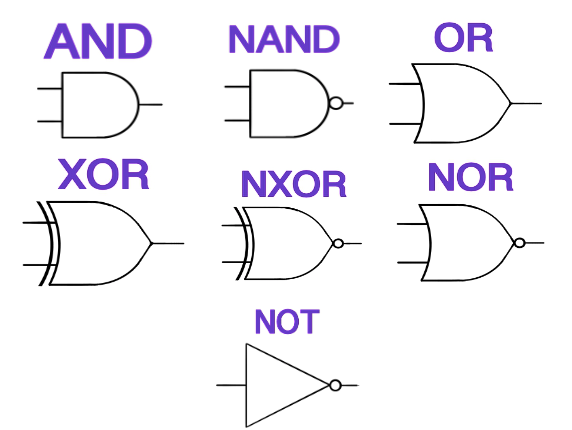
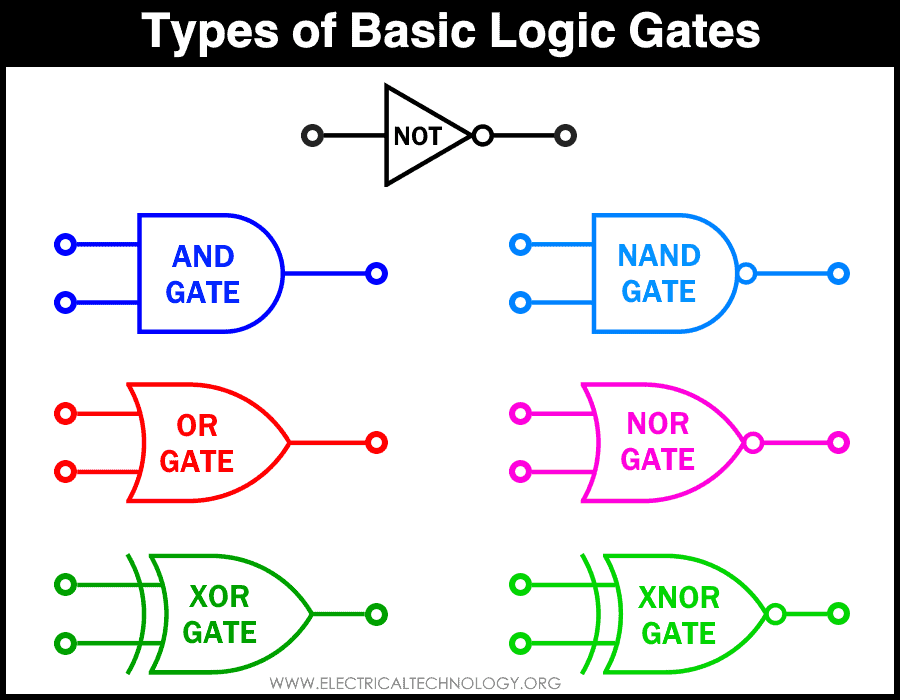
Common Types Of Boolean Logic Gates
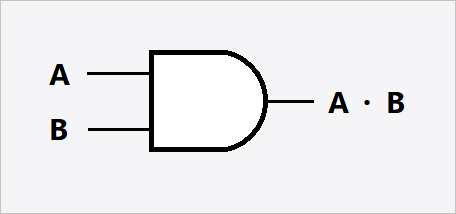
- AND Gate:Outputs 1 only if all inputs are 1.
- OR Gate:Outputs 1 if at least one input is 1.
- NOT Gate:Outputs the opposite of the input.
- NAND Gate:Outputs 0 only if all inputs are 1 (inverse of AND).
- NOR Gate:Outputs 1 only if all inputs are 0 (inverse of OR).
- XOR Gate:Outputs 1 if inputs are different.
- XNOR Gate:Outputs 1 if inputs are the same.
How Boolean Logic Gates Work In Circuits
Each gate uses electronic components to control the flow of current based on input signals. The output changes depending on the input voltage levels representing 0 or 1. This simple switching action forms the basis of digital logic.
Have you ever wondered how your smartphone processes commands instantly? It’s the rapid switching of these gates working behind the scenes. The speed and reliability come from their electronic design.
Credit: medium.com
Transistors: The Building Blocks
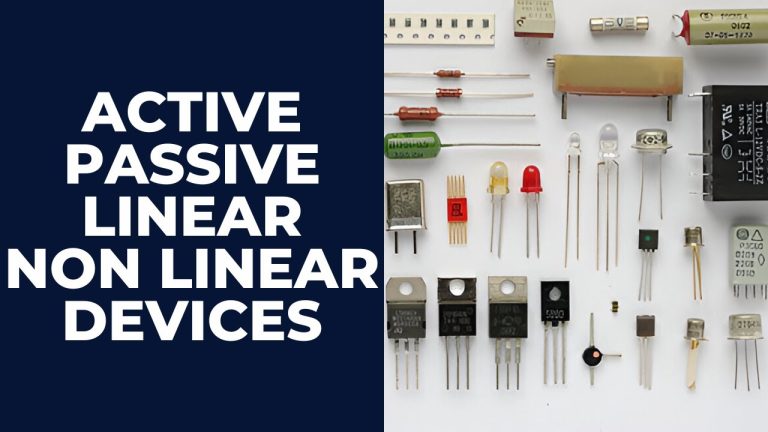
Transistors are the core components in building Boolean logic gates. They act like tiny switches that control electric current. This control allows logic gates to perform basic decisions in digital circuits. Without transistors, modern electronics would not function as they do today.
Types Of Transistors
There are mainly two types of transistors used in logic gates:
- Bipolar Junction Transistors (BJTs):These transistors use current to control the flow of electricity. They have three parts: emitter, base, and collector.
- Field Effect Transistors (FETs):These use voltage to control current flow. The most common type is the Metal-Oxide-Semiconductor FET (MOSFET).
MOSFETs are widely preferred in digital circuits due to their low power use and high speed.
Role In Logic Gates
Transistors work as switches in logic gates. They turn on or off to represent binary values: 1 or 0. This switching allows gates to perform functions like AND, OR, and NOT.
For example, in an AND gate, transistors connect in series. Both must be on to output a high signal. In an OR gate, they connect in parallel. Only one needs to be on for a high output.
This simple switching ability of transistors creates complex logic systems. It forms the basis of all digital computing and electronics.
Diodes In Logic Circuits
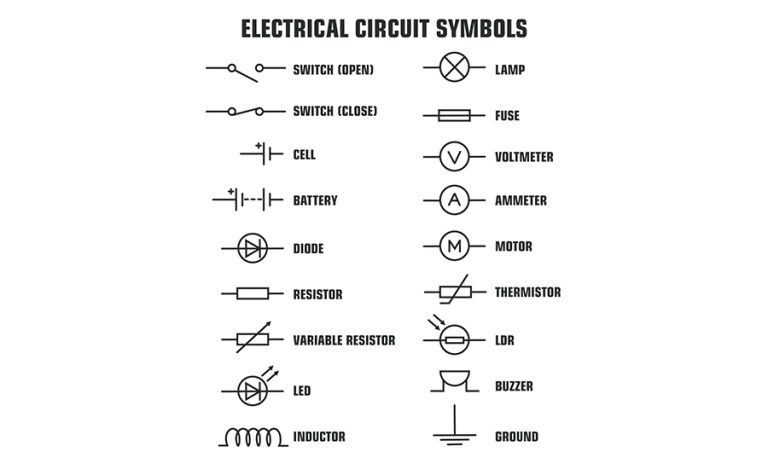
Diodes play a key role in building Boolean logic gates. These simple electronic parts control the direction of current flow. They allow engineers to create basic logical functions like AND, OR, and NOT. Using diodes reduces circuit complexity and cost.
Diodes are easy to use and reliable in logic circuits. Their ability to block or pass current makes them ideal for decision-making in electronics. Understanding how diodes work helps in grasping the foundation of digital logic design.
Functionality In Gates
Diodes act as one-way switches in logic gates. They let current flow only in one direction. This behavior helps implement logic functions by controlling signal paths.
For example, in an OR gate, diodes connect multiple inputs to a single output. If any input is high, current flows through its diode to the output, making the output high.
In an AND gate, diodes work with resistors to ensure the output is high only when all inputs are high. They prevent current flow if any input is low.
Diodes also prevent unwanted feedback between inputs. This keeps the logic circuit stable and reliable.
Common Diode Types
- 1N4148:A small signal diode often used in high-speed logic circuits.
- 1N4001:A general-purpose diode found in power-related applications.
- Zener Diodes:Used for voltage regulation in some logic circuits.
- Schottky Diodes:Known for low forward voltage drop and fast switching.
The 1N4148 diode is the most common choice for Boolean logic gates. It switches quickly and handles low current well. Schottky diodes are preferred when circuits need faster response and lower power loss.
Resistors And Their Role
Resistors play a crucial role in building Boolean logic gates by managing electrical properties within circuits. These simple components control how much current flows and how voltage is distributed, directly affecting the gate’s behavior. Without resistors, the delicate balance needed for accurate logic operations would be impossible to maintain.
Current Control
Resistors limit the current flowing through a circuit, protecting sensitive components like transistors. By controlling current, they prevent damage and ensure the gate switches states properly. Think about how a faucet controls water flow; resistors do the same for electricity.
Have you ever wondered how a logic gate avoids overheating or short circuits? It’s the resistor’s job to keep current within safe limits. This control is essential for maintaining the gate’s reliability over time.
Voltage Division
Resistors also help create voltage dividers, which split voltage into smaller, usable levels for logic gates. This makes it possible to set reference voltages critical for switching between binary states.
Imagine needing exactly half the voltage to trigger a specific output. A pair of resistors can divide the voltage precisely, making the circuit behave as intended. This simple yet effective technique is foundational in electronic design.
Capacitors In Logic Design
Capacitors play a key role in designing Boolean logic gates. They store and release electrical energy quickly. This helps control the flow of signals inside circuits. Capacitors support the timing and stability needed for logic operations. Their presence ensures gates work smoothly without errors.
Timing Applications
Capacitors help set precise time intervals in logic circuits. They charge and discharge at specific rates. This controls how long a signal stays high or low. Timing is crucial for synchronizing operations in digital circuits. Capacitors enable delay functions, pulse shaping, and signal filtering. These functions improve the accuracy of logic gate outputs.
Stability Functions
Capacitors reduce noise and voltage spikes in circuits. They smooth out sudden changes in electrical signals. This protects logic gates from false triggering. Stability ensures reliable performance over time. Capacitors also help maintain consistent voltage levels. This prevents errors caused by fluctuations in power supply.
Credit: medium.com
Integrated Circuits
Integrated circuits (ICs) are small electronic chips that hold many components. These components work together to perform specific tasks. ICs made it possible to build complex digital circuits, including Boolean logic gates. They replaced bulky, individual parts with compact, efficient designs. This change transformed the way logic gates were created and used.
Evolution Of Logic Gates
At first, logic gates were built using separate components like transistors and resistors. These parts were large and used a lot of power. As technology advanced, engineers combined many components into a single chip. This chip, called an integrated circuit, could perform many logic functions. Over time, ICs grew smaller and faster. They allowed circuits to become more reliable and affordable.
Advantages Of Ics
- Smaller size compared to individual components
- Lower power consumption
- Higher speed and better performance
- Greater reliability with fewer connection failures
- Cost-effective manufacturing in large quantities
- Easy to integrate into complex systems
These benefits made ICs the standard for building logic gates. They helped bring digital electronics into everyday devices.
Comparing Discrete Components And Ics
When building Boolean logic gates, choosing between discrete components and integrated circuits (ICs) can shape your entire project. Each option offers unique advantages and challenges, especially in how they perform and fit within your design constraints. Understanding these differences helps you pick the right path for your needs.
Performance Differences
Discrete components, like individual transistors and resistors, give you more control over each part of the circuit. You can tweak specific elements to optimize speed or power consumption. However, this hands-on approach often leads to slower switching speeds compared to ICs.
Integrated circuits combine multiple transistors and components in a single chip. This design reduces the distance signals must travel, boosting speed and efficiency. For example, a CMOS IC logic gate operates faster and consumes less power than an equivalent circuit built from discrete parts.
Have you ever noticed how your DIY logic circuits sometimes lag behind commercial devices? That’s often because those devices use ICs tailored for high-speed operation.
Cost And Size Considerations
Discrete components are generally cheaper when you need just a few gates or want to experiment with custom designs. But as your circuit grows, the cost and space needed can skyrocket. Imagine wiring dozens of transistors and resistors on a breadboard—it quickly becomes bulky and complex.
ICs save you space and often reduce overall cost for large circuits. A single chip can replace dozens of discrete components, making your project cleaner and easier to manage. This is why many commercial electronic devices rely heavily on ICs to keep size and production costs low.
Think about your own projects: Would you rather carry a box of tiny components or a compact chip that does the same job? Your answer might guide your component choice more than anything else.
Modern Advancements In Logic Gate Components
The components used to build logic gates have come a long way from the bulky vacuum tubes and simple transistors of the past. Today’s electronic components are smaller, faster, and more energy-efficient. These advancements directly impact how logic gates perform, opening new possibilities for computing power and device design.
Nanoelectronics
Nanoelectronics uses components that are just a few nanometers in size. At this scale, traditional transistors are replaced by tiny switches made from materials like carbon nanotubes and graphene. These materials allow logic gates to operate with much less power and generate less heat.
Imagine fitting millions of these nano-scale components on a chip smaller than a fingernail. This makes devices faster and more compact. Are you curious how this could change the gadgets you use every day?
- Carbon nanotube field-effect transistors (CNTFETs) offer high speed and low power.
- Graphene-based components provide excellent conductivity and flexibility.
- Single-electron transistors enable switching at extremely low voltages.
Quantum Computing Components
Quantum computing introduces components that work on principles completely different from classical electronics. Instead of using binary bits, these components use quantum bits or qubits, which can represent multiple states simultaneously.
Logic gates in quantum computers use quantum phenomena like superposition and entanglement to perform complex calculations. These gates aren’t made from traditional materials but often rely on superconducting circuits or trapped ions.
Have you ever thought about how quantum logic gates could solve problems that are impossible for classical computers? This technology is still in early stages but promises to redefine what logic gates can achieve.
- Superconducting qubits use Josephson junctions to create quantum gates.
- Trapped ion qubits manipulate ions with lasers to perform logic operations.
- Topological qubits aim for more stability by using exotic states of matter.
Frequently Asked Questions
What Electronic Components Form Basic Logic Gates?
Basic logic gates use transistors, resistors, and diodes. Transistors act as switches to control current flow. Resistors manage voltage levels, while diodes allow current in one direction. These components combine to create AND, OR, NOT, NAND, NOR, XOR, and XNOR gates.
How Do Transistors Create Boolean Logic Gates?
Transistors function as electronic switches in logic gates. They turn on or off based on input signals, representing binary values. By arranging transistors in specific configurations, gates perform Boolean operations, controlling current flow to produce desired logical outputs.
Why Are Diodes Important In Logic Gates?
Diodes ensure current flows only in one direction. This property is crucial for certain gate designs like AND and OR gates. They prevent backflow of current, allowing gates to correctly interpret input signals and produce accurate logical results.
What Role Do Resistors Play In Boolean Logic Circuits?
Resistors control current and voltage levels within logic circuits. They protect components from excessive current and help define voltage thresholds. Proper resistor values ensure stable operation of gates and accurate Boolean logic performance.
Conclusion
Electronic components like transistors and resistors build logic gates. These parts control the flow of electricity to create true or false signals. Each gate type uses a specific setup of these components. Understanding these basics helps explain how computers think and decide.
Simple parts work together to perform complex tasks. This knowledge is key for anyone curious about digital electronics. Small pieces, big impact.