What are Basic Electronic Components: Essential Guide for Beginners
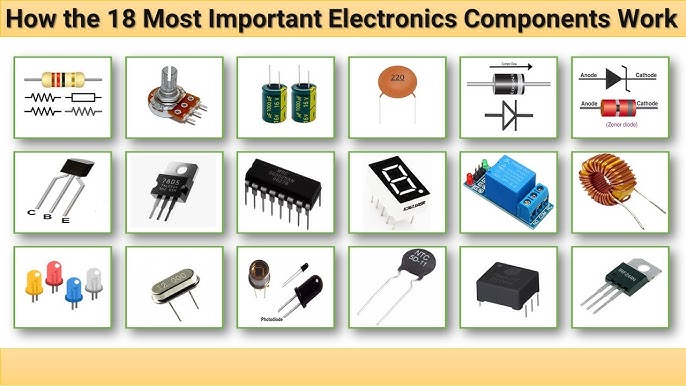
Have you ever wondered what makes your gadgets work? Whether it’s your smartphone, TV, or even a simple remote control, all these devices rely on tiny parts called electronic components.
Understanding these basic components can unlock a whole new level of appreciation for technology—and maybe even inspire you to create your own projects. You’ll discover what these essential parts are, how they work, and why they matter. Ready to dive in and see what’s inside the electronics you use every day?
Let’s get started!
Resistors
Resistors are one of the fundamental building blocks in any electronic circuit. They control the flow of electric current by providing resistance, helping to protect sensitive components and shape the behavior of the circuit. Without resistors, circuits would be uncontrollable and likely to fail quickly.
Function And Purpose
The main job of a resistor is to limit current. It acts like a traffic controller, deciding how much current can pass through a particular path. This prevents damage to other components by ensuring they receive the right amount of current.
Resistors also help divide voltages within circuits. This is essential when different parts of a device need different voltage levels to work properly. Ever wondered how your phone’s screen or speaker gets just the right power? Resistors make that happen.
Types Of Resistors
There are several types of resistors, each suited for different applications. The most common are:
- Carbon Film Resistors:Affordable and widely used in everyday electronics.
- Metal Film Resistors:Offer higher precision and stability over time.
- Wire Wound Resistors:Handle higher power and are used in heavy-duty circuits.
- Variable Resistors (Potentiometers):Allow you to adjust resistance manually, useful in volume controls and tuning circuits.
Choosing the right type depends on the circuit’s needs and environmental conditions. Have you ever had a device overheat because of a wrong resistor choice? That’s a clear sign how critical this decision can be.
Reading Resistor Values
Resistors use color bands to indicate their resistance value, tolerance, and sometimes reliability. This system might look confusing at first, but it’s quite logical once you get the hang of it.
Each color corresponds to a number, and their order shows the resistor’s value. For example, a red band means 2, green means 5, and so on. The first two bands give you the first digits, the third band tells you how many zeros to add, and the last band shows tolerance.
| Color | Digit | Tolerance (%) |
|---|---|---|
| Black | 0 | – |
| Brown | 1 | ±1% |
| Red | 2 | ±2% |
| Orange | 3 | – |
| Yellow | 4 | – |
| Green | 5 | ±0.5% |
| Blue | 6 | ±0.25% |
| Violet | 7 | ±0.1% |
| Gray | 8 | ±0.05% |
| White | 9 | – |
| Gold | – | ±5% |
| Silver | – | ±10% |
Try picking up a resistor next time you have one handy and decode its colors. It’s a simple skill that gives you immediate insight into how the component will behave in your circuit.
Capacitors
Capacitors are one of the fundamental building blocks in electronics. They store and release electrical energy, acting like tiny energy reservoirs in your circuits. Understanding capacitors can help you design better projects and troubleshoot issues more effectively.
Role In Circuits
Capacitors help smooth out electrical signals by storing charge temporarily. They can block direct current (DC) while allowing alternating current (AC) to pass, which is essential in filtering applications. Have you ever wondered how your phone keeps steady power despite fluctuations? Capacitors play a big part in that.
Varieties Of Capacitors
There are many types of capacitors, each suited for different tasks:
- Ceramic Capacitors:Small, reliable, and used for high-frequency applications.
- Electrolytic Capacitors:Larger, with higher capacitance, ideal for power supply filtering.
- Tantalum Capacitors:Compact with stable capacitance but sensitive to voltage spikes.
- Film Capacitors:Known for low loss and high precision in audio circuits.
Choosing the right capacitor can make your circuit more efficient and stable.
Charging And Discharging
Capacitors charge by accumulating electric charge on their plates when connected to a power source. The time they take to charge or discharge depends on their capacitance and the circuit resistance, known as the time constant.
Ever noticed how some circuits delay actions? That delay often comes from a capacitor charging or discharging. You can control timing in your projects by adjusting capacitor values, a simple yet powerful technique.
Inductors
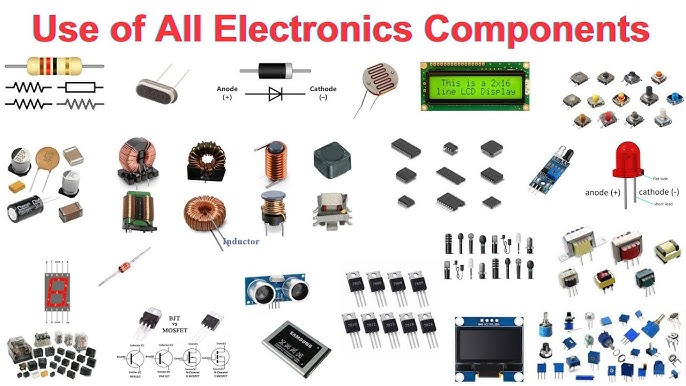
Inductors are fundamental components in electronics. They store energy in a magnetic field when electric current flows through them. Inductors resist changes in current, making them vital for many circuits. They consist of coils of wire, usually wrapped around a core. The design and material affect their properties and uses.
Magnetic Field Creation
When current passes through the coil, it creates a magnetic field around it. This magnetic field stores energy temporarily. The strength of this field depends on the current and coil turns. The magnetic field collapses when the current stops, releasing the stored energy. This effect helps control current changes in circuits.
Applications In Electronics
- Filtering signals in power supplies
- Energy storage in transformers
- Tuning circuits in radios and TVs
- Creating delay in signal timing
- Protecting circuits from sudden current spikes
Inductors smooth out electrical noise and improve signal quality. They play a key role in many electronic devices.
Inductor Types
| Type | Description | Common Use |
|---|---|---|
| Air Core | No magnetic core, only wire coil | High-frequency circuits |
| Iron Core | Coil wrapped around iron core | Power transformers, low frequency |
| Ferrite Core | Coil wrapped around ferrite material | High-frequency transformers, inductors |
| Toroidal | Coil wound on a donut-shaped core | Efficient power inductors, low noise |
Credit: www.youtube.com
Diodes
Diodes are essential electronic components that control the flow of electric current. They allow current to pass in one direction while blocking it in the opposite direction. This unique property makes diodes vital in many electronic circuits. Understanding diodes helps in grasping the basics of electronics.
One-way Current Flow
A diode acts like a one-way valve for electricity. It lets current flow only from its anode to its cathode. If the current tries to flow backward, the diode stops it. This behavior protects circuits and ensures they work correctly.
Common Diode Types
- Standard Diode:Used for simple current control and rectification.
- Zener Diode:Allows current to flow backward at a certain voltage for voltage regulation.
- Light Emitting Diode (LED):Emits light when current passes through it.
- Schottky Diode:Has a low voltage drop and fast switching.
Diode Applications
Diodes serve many purposes in electronics. They convert AC to DC in power supplies. They protect circuits from voltage spikes. LEDs provide indicator lights in devices. Zener diodes keep voltage stable in sensitive circuits. Schottky diodes improve efficiency in high-speed switching.
Transistors
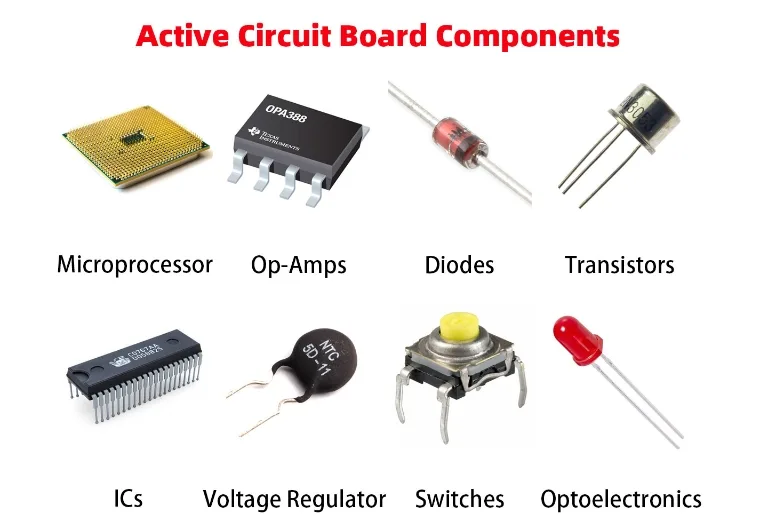
Transistors are tiny electronic devices that control electric signals. They act like switches or amplifiers in circuits. These components are key to modern electronics, powering everything from radios to computers. Understanding transistors helps you grasp how electronic devices work at a basic level.
Switching And Amplification
Transistors can turn electrical signals on and off. This switching ability helps control devices like lights and motors. They also make weak signals stronger through amplification. This is useful in audio devices, radios, and many communication tools. Transistors allow precise control over electrical flow.
Bipolar Junction Transistors
Bipolar Junction Transistors (BJTs) use both electrons and holes to conduct current. They have three parts: the emitter, base, and collector. Small current at the base controls larger current between emitter and collector. BJTs are common in amplifying audio signals and switching electronic signals.
Field Effect Transistors
Field Effect Transistors (FETs) control current using an electric field. They have three parts: source, gate, and drain. FETs use voltage at the gate to control current flow. These transistors are efficient and often used in digital circuits and low-power devices.
Credit: www.lstpcb.com
Integrated Circuits
Integrated Circuits (ICs) are the backbone of modern electronics. These tiny chips combine multiple electronic components into a single, compact package. They allow you to build complex circuits without handling countless separate parts.
Complexity In A Small Package
ICs can contain thousands or even millions of transistors, resistors, and capacitors packed into a small silicon chip. This miniaturization saves space and improves performance. Imagine fitting an entire radio or computer processor into something the size of a fingernail.
Have you ever wondered how your smartphone fits so much power in your palm? It’s all thanks to integrated circuits making complex functions possible in tiny spaces.
Common Ics In Use
You’ll find ICs everywhere—from simple timers to advanced microprocessors. Some popular types include:
- Operational Amplifiers (Op-Amps):Used in audio equipment and signal processing.
- 555 Timers:Basic timing applications like blinking LEDs or generating pulses.
- Microcontrollers:Mini computers controlling devices like microwaves and remote controls.
- Memory Chips:Store data in computers and smartphones.
Knowing which IC to use can make your projects easier and more efficient. What kind of IC would make your next project smarter?
Ic Pin Configurations
Each IC has pins that connect it to the rest of your circuit. These pins have specific functions like power supply, input, output, and ground. Understanding pin configuration helps you avoid mistakes that could damage the IC or cause your project to fail.
Here is a simple example of a common IC pin configuration—the 555 timer:
| Pin Number | Function |
|---|---|
| 1 | Ground |
| 2 | Trigger |
| 3 | Output |
| 4 | Reset |
| 5 | Control Voltage |
| 6 | Threshold |
| 7 | Discharge |
| 8 | VCC (Power Supply) |
Understanding how pins work lets you connect ICs correctly every time. What’s your experience with handling IC pins—easy or tricky?
Switches
Switches are essential components in electronic circuits. They control the flow of electricity by opening or closing a circuit. This simple action allows devices to turn on or off. Switches come in many forms and sizes, each designed for specific tasks. Their role is crucial in both simple and complex electronics.
Types Of Switches
- Toggle Switch: Flips between on and off positions.
- Push Button Switch: Activates when pressed and releases when let go.
- Slide Switch: Moves sideways to open or close a circuit.
- Rotary Switch: Turns to select different circuit paths.
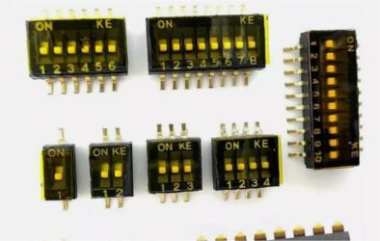
- Dip Switch: Small switches used for setting options on circuit boards.
Applications In Circuits
Switches control power in almost every electronic device. They start or stop current flow in lighting systems. In computers, switches manage power and input commands. Switches also help select modes in appliances like fans and radios. They protect circuits by disconnecting power during faults.
Switching Mechanisms
Mechanical switches use physical movement to connect contacts. Electrical switches use electronic signals to control circuits without moving parts. Some switches combine both methods for better performance. Switches may be momentary, only active while pressed. Others are maintained, staying in position until changed.

Credit: www.youtube.com
Connectors
Connectors play a crucial role in electronic circuits by linking different components and enabling the flow of signals or power. Without connectors, assembling or repairing electronic devices would be complex and time-consuming. They provide a secure and reliable pathway, making your circuits more flexible and easier to manage.
Types Of Connectors
Connectors come in various shapes and sizes, each designed for specific purposes. Some common types include:
- Pin Headers:Simple rows of pins used on PCBs for easy connections.
- USB Connectors:Widely used for data transfer and power supply in consumer electronics.
- Coaxial Connectors:Designed for high-frequency signals, common in RF and video equipment.
- Terminal Blocks:Allow easy connection of wires without soldering, useful in industrial settings.
- Ribbon Cable Connectors:Used to connect flat ribbon cables to circuit boards.
Each connector type serves a different function depending on your project’s requirements. Have you ever struggled to find the right connector and wasted time fixing poor connections?
Importance In Circuit Design
Connectors aren’t just about joining wires; they affect the reliability and performance of your entire circuit. A bad connector can cause intermittent faults, signal loss, or even damage sensitive components.
They also make maintenance and upgrades easier, saving you time and effort. Think about the last time you had to replace a component—wouldn’t a good connector have made that process smoother?
Choosing The Right Connector
Selecting the right connector depends on factors like current rating, voltage, mechanical strength, and ease of use. Always check if the connector matches the cable or board size and environmental conditions where it will be used.
Consider how often you’ll connect and disconnect it. For example, a quick-release connector might be best for frequent changes, while a soldered connector offers a more permanent solution.
As you plan your next project, ask yourself: what connector will keep your circuit safe and functional without adding unnecessary complexity?
Power Sources
Power sources are essential in electronics. They provide the energy needed for circuits and devices to work. Without power, electronic components cannot function. Understanding different power sources helps in choosing the right one for a project.
Batteries And Power Supplies
Batteries store chemical energy and convert it to electrical energy. They are portable and come in many sizes. Power supplies convert AC from the wall into usable DC voltage. They can be adjustable or fixed output. Both provide steady power but serve different needs.
Ac Vs. Dc Power
AC means alternating current. It changes direction periodically. AC is common in homes and buildings. DC means direct current. It flows in one direction only. Most electronic circuits use DC power. Power supplies often convert AC to DC for devices.
Voltage And Current Ratings
Voltage is the force that pushes electric current. It is measured in volts (V). Current is the flow of electric charge. It is measured in amperes (A). Components need specific voltage and current levels. Using the wrong ratings can damage parts or cause failure.
Tools For Working With Components
Working with basic electronic components requires more than just understanding their functions. Having the right tools can make your projects smoother and more precise. Whether you’re assembling a simple circuit or troubleshooting a complex board, these tools become your best allies.
Essential Tools
Start with a good set of wire cutters and strippers. These help you prepare wires cleanly without damaging the internal conductors. Needle-nose pliers are also handy for bending leads and positioning tiny parts exactly where you want them.
A small screwdriver set designed for electronics is indispensable. You’ll often find screws and connectors that need delicate handling. Also, consider a component organizer box—it saves time hunting for resistors or capacitors when you’re deep into building.
Soldering Equipment
Soldering is a skill you’ll quickly appreciate, but only if you have the right gear. A reliable soldering iron with adjustable temperature control lets you work on various components without overheating them. Pair it with a stand and a damp sponge to keep the tip clean and effective.
Don’t overlook solder wire quality. Lead-free solder is safer and more environmentally friendly, but make sure it has a rosin core to help the solder flow smoothly. If you’ve struggled with messy joints before, a solder sucker or desoldering braid can save your project by removing excess solder.
Measurement Instruments
How do you confirm your circuit is working correctly? That’s where measurement instruments come in. A digital multimeter is your best friend for checking voltage, current, and resistance quickly and accurately.
For more detailed work, consider a basic oscilloscope to visualize signals in real-time. Even if you’re just starting, having a frequency generator or logic analyzer handy can help diagnose tricky issues. These tools turn guesswork into clear data, making your troubleshooting more effective.
Frequently Asked Questions
What Are The Main Types Of Basic Electronic Components?
Basic electronic components include resistors, capacitors, inductors, diodes, and transistors. Each serves a unique function in circuits.
How Do Resistors Work In Electronic Circuits?
Resistors limit electric current flow, protecting components and controlling voltage in circuits. They are essential for managing circuit behavior.
Why Are Capacitors Important In Electronics?
Capacitors store and release electrical energy. They stabilize voltage, filter signals, and improve power supply efficiency in circuits.
What Role Do Transistors Play In Electronics?
Transistors amplify or switch electronic signals. They are fundamental in building amplifiers, switches, and digital circuits.
Conclusion
Basic electronic components form the heart of all circuits. They help control and direct electric current. Understanding these parts makes learning electronics easier. Each component has a unique role to play. Knowing their functions builds a strong foundation. This knowledge helps in fixing or making devices.
Electronics become less confusing with simple basics. Keep exploring each component step by step. Soon, you will feel confident working with circuits. Simple parts lead to complex creations. Start small and grow your skills steadily.