What Best Describes an Electronic Component That is Polarised: Key Facts
Have you ever powered on a DIY circuit only to watch a component smoke or fail instantly? In most cases, the culprit is reversed polarity on a polarised electronic component — a small, easily avoidable error that costs beginners hundreds of dollars in wasted parts every year. Whether you’re a student, DIY hobbyist, or technician, understanding polarised parts is a non-negotiable foundational skill: if you’re starting out in hobby electronics, safe handling practices will save you hours of frustration and damaged components.
This guide breaks down exactly what makes a component polarised, how to identify and install these parts correctly, common real-world use cases, and troubleshooting steps for polarity-related failures. By the end, you’ll have the knowledge to work with polarised parts confidently and avoid the most costly mistakes in electronics building and repair. You can also read our guide on what are basic electronic components.
Core Definition of a Polarised Electronic Component
Polarisation in electronics refers to the inherent electrical and physical asymmetry of certain components, which have distinct, non-interchangeable positive (anode) and negative (cathode) terminals. These parts only operate as designed when current flows in the correct forward direction; reverse bias causes them to underperform, fail permanently, or pose serious safety risks. Unlike symmetric non-polarised parts, which work identically regardless of installation direction, polarised components require deliberate orientation during circuit assembly.
In practice, even experienced electronics technicians double-check polarity markings before powering a new build, as a single reversed component can destroy an entire circuit board in milliseconds. This directional dependency is not a design flaw — it is a core functional feature that enables critical circuit behaviours like voltage rectification, signal control, and energy storage. You can also read our guide on a certain type of electronic component.
Key Traits That Distinguish Polarised Parts
All polarised components share three core traits:
- Distinct terminal markings (positive/negative symbols, stripes, or physical asymmetry) to indicate correct orientation
- Directional current flow: they only conduct efficiently in one direction, blocking or impeding reverse current
- Catastrophic failure risk if connected in reverse, ranging from immediate burnout to fire or explosion in high-voltage applications
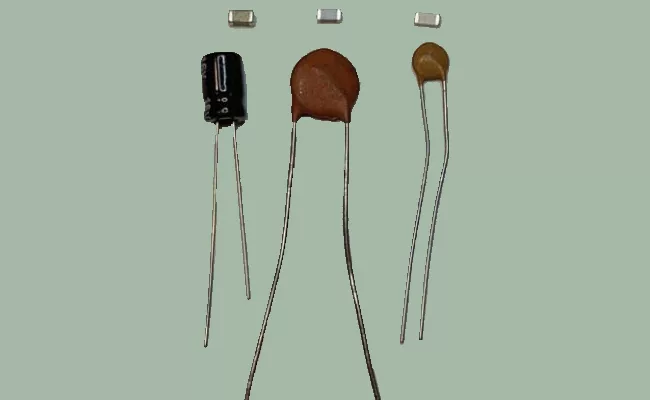
 Polarised electrolytic capacitors have a distinct negative stripe marking the cathode terminal, with the longer positive lead extending from the opposite end.
Image source: www.ic-components.com
Polarised electrolytic capacitors have a distinct negative stripe marking the cathode terminal, with the longer positive lead extending from the opposite end.
Image source: www.ic-components.com
Polarised vs. Non-Polarised Components: Key Differences
The table below outlines the core differences between these two component classes to eliminate confusion for new builders:
| Feature | Polarised Component | Non-Polarised Component |
|---|---|---|
| Terminal marking | Distinct positive (+) and negative (−) symbols or stripes | No polarity markings, or symmetric markings |
| Current flow | Only conducts efficiently in one direction | Conducts equally well in either direction |
| Reverse connection risk | Instant failure, damage, or safety hazard | No damage or performance loss |
| Common examples | Electrolytic capacitors, diodes, LEDs, transistors | Ceramic capacitors, resistors, film capacitors |
Common Types of Polarised Electronic Components
Polarised components span semiconductors, passive parts, and energy storage devices, each with unique functional roles in circuits. Below are the most common types you will encounter in hobby and professional builds:
Diodes
Diodes are the most basic polarised semiconductor component, consisting of a P-N junction that allows current to flow only from the anode (positive) to the cathode (negative) terminal. The cathode is marked with a white or silver stripe on the component body. Diodes are used for AC-to-DC rectification, signal clipping, reverse polarity protection, and voltage regulation (Zener diodes, a polarised subtype, maintain fixed voltage levels in power supplies).
Electrolytic Capacitors
These high-capacitance passive components use a thin oxide layer as the dielectric, paired with a liquid or gel electrolyte to achieve large capacitance values in compact sizes. The negative terminal is marked with a printed stripe, and the positive lead is longer than the negative lead. Electrolytic capacitors are used for power supply filtering, voltage smoothing, and circuit decoupling. Reversing polarity on an electrolytic capacitor causes the oxide layer to break down instantly, leading to electrolyte venting, swelling, or even fire — a common failure mode in beginner power supply builds. Reputable polarised capacitors carry Underwriters Laboratories safety certifications to reduce risk of failure or fire in high-voltage applications. You can also read our guide on a company manufacturing electronic components for home.
Light-Emitting Diodes (LEDs)
LEDs are a specialised subtype of diode that emits light when forward current flows through the P-N junction. The longer lead is the positive anode, and a flat edge on the plastic casing marks the negative cathode. Even small reverse voltage (as low as 5V for standard 5mm LEDs) can destroy the junction permanently, so current-limiting resistors are always used in series with LEDs in circuits. They are used for indicator lights, display panels, status LEDs on consumer devices, and custom lighting builds.
Additional Polarised Components
Beyond the parts listed above, several other common components are polarised:
- Transistors: Bipolar junction transistors (BJTs) have emitter, base, and collector terminals that must be oriented correctly for amplification or switching functions. Field-effect transistors (FETs) also have distinct source, gate, and drain terminals with strict polarity requirements.
- Tantalum capacitors: Small, low-profile capacitors with high capacitance density, popular in compact devices like smartphones and wearables, but highly sensitive to reverse polarity and prone to catastrophic failure if misinstalled.
- Rechargeable lithium-ion batteries: Marked with clear positive and negative terminals, reverse connection can cause thermal runaway, fire, or explosion, making polarity verification critical for battery-powered builds.
How to Identify Polarised Components Quickly
Correct identification is the first step to avoiding polarity-related failures. Use the two cues below to confirm polarity before installation:
Standard Markings and Symbols
Nearly all polarised components have clear, standardised markings:
- Capacitors have a printed + sign on the positive terminal, and a coloured stripe on the negative terminal
- Diodes have a white/silver stripe on the cathode (negative) end
- LEDs have a longer positive lead and a flat edge on the casing marking the negative cathode
- Complex parts like transistors and integrated circuits have pinout diagrams printed on their manufacturer datasheets, which should always be referenced before installation to avoid misalignment.
A frequent error among new builders is assuming all capacitors are non-polarised — ceramic and film capacitors are non-polarised, but any capacitor with a printed + sign or stripe is polarised and requires correct orientation. You can also read our guide on how do you identify electronic components.
Physical Asymmetry Cues
Many polarised components have asymmetric packaging designed to prevent incorrect installation:
- Electrolytic capacitors often have a concave top to indicate the negative terminal
- Transistors have a physical tab or notch aligned with pin 1
- Surface-mount components have a dot, line, or notch on the body matching the silkscreen on the printed circuit board (PCB)
For ambiguous parts, a multimeter set to diode mode can confirm polarity: the meter will beep when the positive probe touches the anode and negative probe touches the cathode for functional diodes and LEDs.
Correct Installation and Orientation Best Practices
Following these steps will eliminate nearly all polarity-related build failures:
- Cross-reference the component’s polarity markings with the circuit schematic or PCB silkscreen before insertion
- For through-hole components, bend leads to match the board’s hole spacing, ensuring no strain on the component body
- For surface-mount parts, use a magnifying glass to confirm the polarity marking aligns with the PCB’s reference designator
- Test unknown components with a multimeter set to diode mode to confirm forward bias functionality before installation
If you’re working on custom light-up poster builds, verifying LED polarity before soldering eliminates wasted materials and frustrating rework. You can also read our guide on what is basic electronics components.
Risks of Incorrect Polarity
Incorrect installation of polarised components carries concrete, often costly risks:
- Instant component failure: Electrolytic capacitors may swell, leak, or explode; LEDs will burn out immediately; transistors can short internally
- Circuit damage: Reverse current can destroy nearby microcontrollers, voltage regulators, or sensors, requiring full board replacement
- Safety hazards: Overheating from reversed polarity can cause burns, smoke, or fire, especially in high-voltage power supply circuits
- System downtime: In industrial or automotive applications, a single reversed polarised component can halt production lines or disable vehicle systems, costing thousands of dollars in lost revenue.
Before soldering or powering any build, confirm local hobby electronics regulations to ensure your work meets safety and electrical code requirements.
Real-World Applications of Polarised Components
Polarised components are ubiquitous across every sector of modern technology, enabling critical functionality that non-polarised parts cannot provide:
Consumer Electronics
Polarised parts are found in nearly all common household gadgets, from phone chargers to smart speakers and wireless earbuds. Rectifier diodes convert AC wall power to DC in charging adapters, electrolytic capacitors smooth voltage in laptop power supplies, and LEDs provide status indicators on everything from TVs to coffee makers. Without polarised components, modern consumer electronics would be far larger, less efficient, and prone to frequent failure.
Industrial and Automotive Systems
Polarised parts are engineered for reliability in harsh, high-load environments: reverse polarity protection diodes prevent damage to vehicle ECUs from jump-start errors, and polarised capacitors stabilize voltage in industrial motor controllers to prevent unexpected shutdowns. A single reversed polarised capacitor in a factory automation controller can cause up to 8 hours of unplanned downtime, costing an average of $10,000 per hour in lost production for manufacturing lines.
Emerging Technologies and Hobbyist Projects
Polarised components are core to modern emerging tech: low-power polarised capacitors extend battery life in wearable health monitors, and diodes enable energy harvesting in IoT sensors. For hobbyists, polarised parts are used in custom builds like LED art, DIY audio equipment, and wearable tech for education, where reliable, low-power operation is non-negotiable. All polarised components must meet global electronics safety standards to prevent failure in consumer and industrial use cases.
Recent Advancements in Polarised Component Design
Modern polarised components have evolved significantly from early designs, with improvements focused on safety, reliability, and sustainability:
- Enhanced safety features: Modern electrolytic capacitors now include built-in pressure relief vents and fail-safe designs to prevent explosion or fire even if connected in reverse, meeting updated global safety standards.
- Miniaturization: Surface-mount (SMD) polarised components are now available in 0201 and 01005 package sizes, allowing designers to fit more functionality into smartphones, smartwatches, and wireless earbuds without sacrificing reliability. Tantalum capacitors, for example, now offer up to 100µF of capacitance in a package smaller than a grain of rice.
- Sustainable designs: Leading manufacturers now produce RoHS-compliant, lead-free polarised components to reduce environmental impact, and many electrolytic capacitors now use biodegradable electrolytes to minimize waste if they fail.
Troubleshooting Common Polarity Issues
Even experienced builders encounter polarity-related failures occasionally. Follow these steps to diagnose and fix issues quickly:
Common Symptoms of Reversed Polarity
Watch for these warning signs of incorrect polarity:
- Device fails to power on or powers on intermittently
- Visible swelling, leaking, or burn marks on polarised capacitors
- Component becomes hot to the touch within seconds of power being applied
- Abnormal voltage readings across polarised parts when measured with a multimeter
- Burnt plastic or electrical odor emanating from the circuit board
Step-by-Step Troubleshooting and Repair
- Immediately power off and unplug the circuit to prevent further damage to nearby components
- Visually inspect all polarised components for signs of damage (swelling, leaks, discoloration)
- Use a multimeter set to diode mode to test diodes, LEDs, and transistors for correct forward/reverse bias functionality
- Compare component markings to the circuit schematic to identify misoriented parts
- Reorient or replace damaged components, double-checking polarity before re-powering the circuit
If you’re looking to scale your skills, understanding polarised components is a core requirement for monetizing hobby builds or pursuing professional electronics repair work.
Frequently Asked Questions
What exactly defines a polarised electronic component?
A polarised component has distinct, non-interchangeable positive and negative terminals, and only operates as designed when current flows in the correct direction. Unlike non-polarised parts, which are electrically symmetric, polarised components will fail, underperform, or pose safety risks if connected in reverse.
Can a non-polarised component replace a polarised one?
In most cases, no. Non-polarised components lack the specialised internal structure (such as the oxide dielectric layer in electrolytic capacitors or the P-N junction in diodes) required for polarised part functions. For example, a non-polarised ceramic capacitor cannot replace a polarised electrolytic capacitor in a power supply filtering circuit, as it cannot handle the required voltage ripple and may fail prematurely.
What is the most common mistake beginners make with polarised parts?
The most frequent error is assuming all capacitors are non-polarised, leading to reverse installation of electrolytic or tantalum capacitors. This mistake causes immediate component failure in the vast majority of cases, as reported by electronics repair technicians. Always check for polarity markings before installing any capacitor.
Do all capacitors have polarity?
No. Only electrolytic, tantalum, and some specialty film capacitors are polarised. Ceramic disc, polyester, and polypropylene capacitors are non-polarised and can be installed in either direction without risk of damage.
Conclusion
A polarised electronic component is defined by its distinct positive and negative terminals, which require correct orientation for safe, functional operation. From diodes and electrolytic capacitors to LEDs and transistors, these parts are foundational to every modern electronic device, enabling critical functions like voltage conversion, energy storage, and signal control. Identifying polarised parts is straightforward via standard markings and physical asymmetry, and following simple pre-installation checks eliminates nearly all polarity-related failures. Modern polarised components also include enhanced safety features to reduce risk even in the event of misinstallation, making them more reliable than ever for hobby and professional use.
Mastering polarised component handling is a core skill for anyone working with electronics, from beginner hobbyists to professional technicians. If you’re new to circuit building, start with a beginner-friendly kit that includes clearly marked parts to practice safe installation. For those looking to advance their skills, explore our guide to monetizing hobby builds to turn your electronics knowledge into a side income.